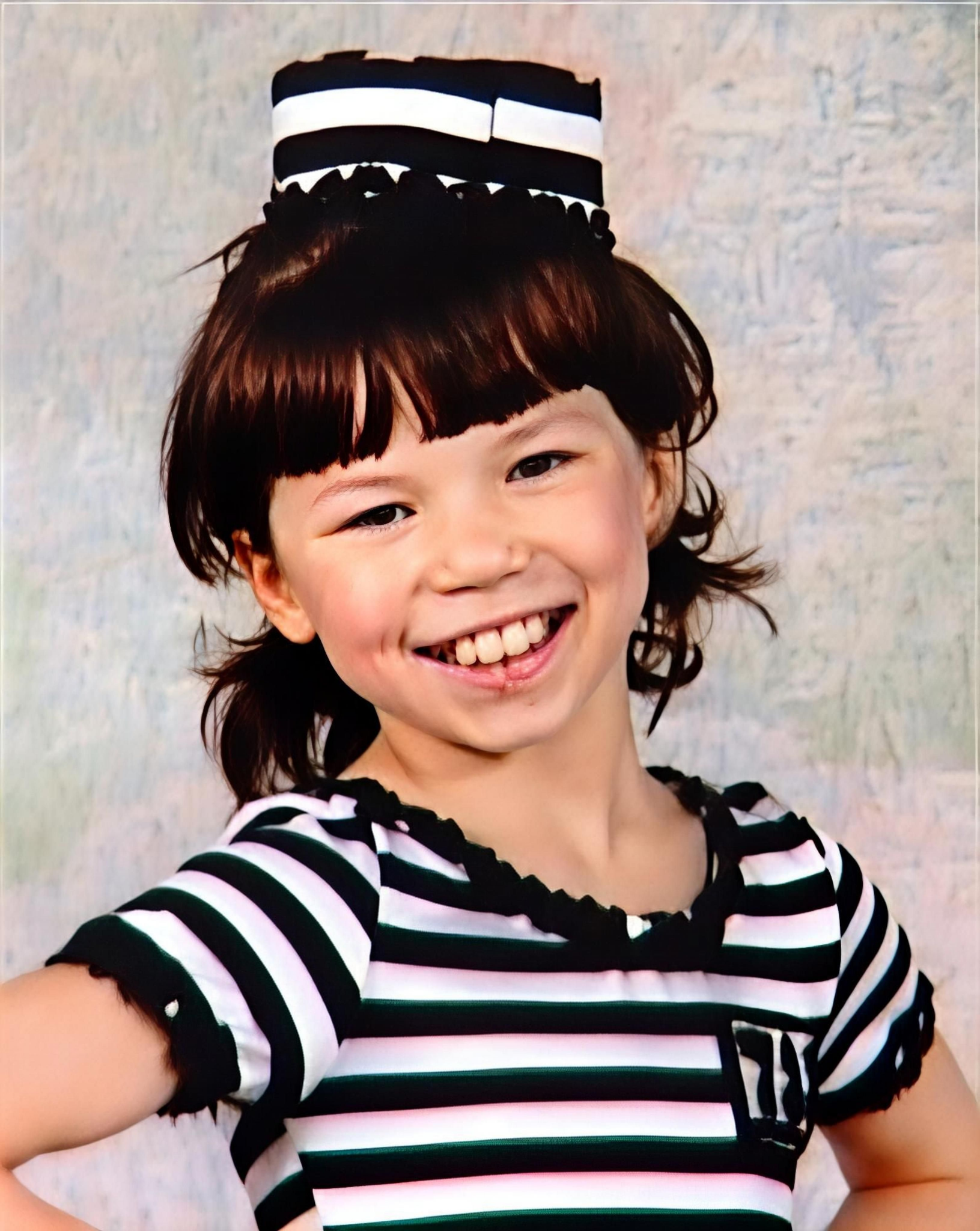
Remembering Ursula
Ursula Sunshine Assaid was five years old. Her father reportedly chose the name Ursula Sunshine Assaid so that her initials would spell U.S.A. More than four decades after her death, Ursula's story continues to be used to teach people about recognizing and reporting child abuse. That legacy exists because an extraordinary number of people reportedly saw pieces of what was happening to Ursula before she died. But before she became an example of what can happen when warning signs are ignored, Ursula was simply a five year old little girl who needed someone to protect her. She went to school. She had teachers and neighbors. There were people around her who saw her. And during the final days of her life, Ursula was visibly exhausted, hungry, thirsty and desperate for help. Her name was Ursula Sunshine Assaid. She deserved to be heard while she was still alive.
Ursula's Story
Ursula endured prolonged and severe abuse at the hands of her mother's boyfriend, Donald McDougall, while her mother, Susan Assaid, failed to protect her. During the final days of Ursula's life, the abuse escalated into sustained torture. Records from the case later became the basis for the book Death From Child Abuse... And No One Heard, which reconstructed the final 55 hours of Ursula's life from testimony and evidence presented during the criminal proceedings. Ursula was deprived of some of the most basic things a five year old child needed to survive. She was denied food, water and sleep. McDougall forced her to stand outside beneath a tree for hours without food, water or permission to use the bathroom. If Ursula wet herself, she was punished. She was forced to march for hours while repeatedly reciting the alphabet. If she made a mistake, she was beaten. At other times, Ursula was forced to march naked or was humiliated by having her soiled underwear placed on her head while the adults ate dinner or watched television. Even nighttime did not bring relief. Ursula was made to stand inside a suitcase rather than being allowed to sleep normally. McDougall reportedly set an alarm so that he could wake periodically and make sure she was still standing. Ursula was starving and desperately thirsty, yet food and water continued to be withheld from her. Soap was forced into her mouth. In one particularly cruel punishment described in accounts of the case, McDougall made what was called a "soap sandwich," placing pieces of bar soap between bread and forcing it upon Ursula. After an especially severe beating, Ursula complained that she was thirsty. Instead of giving the five year old water to drink, McDougall submerged her in a sink filled with ice. As the ice melted, the freezing water came into contact with her already bruised and injured body. Eventually, Ursula's small body could no longer survive what was being done to her. On September 25, 1982, Ursula Sunshine Assaid died. She was only five years old. Even after her death, Ursula was not treated with dignity. Her body was placed inside a weighted bag and dumped into a retention pond. Her remains were not recovered until months later, after Susan Assaid eventually disclosed what had happened to her daughter.
Ursula's death ended the abuse she had been forced to endure, but it also exposed how much of her suffering had occurred where other people could see pieces of what was happening. Her story would eventually become an enduring lesson about recognizing the warning signs of child abuse and acting before another child runs out of time.
Warning Signs & System Failures
Perhaps the most haunting part of Ursula's story is contained in the title of the book later written about her: Death From Child Abuse...And No One Heard. The book was specifically created not only to document Ursula's death but to teach people how to recognize the physical and psychological signs of child abuse and why bystanders must become involved when a child may be in danger. Neighbors could see Ursula standing beneath a tree in the backyard for hours at a time. McDougall reportedly bragged to friends about the punishments he imposed upon her. And then there was Ursula's school. During the one day Ursula attended school during her final week, she was so exhausted that she clung to her teacher's legs rather than playing. Her mother had sent a note instructing school personnel not to allow Ursula to drink anything. Ursula managed to secretly take a sip of water at school. No intervention came in time. That is why Ursula's story became bigger than the prosecution of two adults. It became a lesson about bystanders. A child may not walk up to an adult and clearly say, I am being abused. Sometimes the warning is a bruise. Sometimes it is exhaustion. Sometimes it is hunger. Sometimes it is a child desperately clinging to a trusted adult. And sometimes protecting a child requires someone to decide that what they are seeing is not something they can simply ignore.
Justice for Ursula
Donald McDougall and Susan Assaid were prosecuted following the discovery of Ursula's body. McDougall was convicted of second-degree murder and sentenced to 34 years in prison. Susan Assaid pleaded guilty to manslaughter and received a 15 year prison sentence.
Donald McDougall
Relationship to Ursula: Mother's boyfriend
Conviction: Second-degree murder
Sentence: 34 years
Susan Assaid
Relationship to Ursula: Mother
Conviction: Manslaughter
Sentence: 15 years
Although Susan Assaid received a 15 year sentence, she served approximately five years before being released.
McDougall never completed his sentence. On October 1, 1996, approximately 14 years after Ursula's death, another prisoner attacked McDougall with a steel bar in the yard of Avon Park Correctional Institution. McDougall died from the beating. At the time, he was still serving the 34 year sentence imposed for killing Ursula.
Forever Remembered
Ursula Sunshine Assaid died in 1982. And people are still learning her name. Her case became a book. That book became an educational resource about recognizing child abuse. Decades later, the U.S. Department of Justice's criminal-justice library still catalogs Ursula's story specifically as a resource about child-abuse detection, prevention and reporting. There is a reason her story has endured. Ursula was surrounded by people. Neighbors saw her. Teachers saw her. Friends of the adults heard about the punishments being inflicted upon her. Yet a five year old little girl remained trapped inside that home until her body could endure no more. The brutality matters. We should remember that Ursula was starved. That she was denied water. That she was deprived of sleep. That she was humiliated and beaten. That she was forced to march when she was exhausted. And that after she died, her tiny body was hidden in a weighted bag beneath the water of a retention pond. But Ursula was more than the terrible things done to her. Her name was Ursula Sunshine Assaid. She was five years old. She should have grown up. And perhaps the most important way to honor Ursula now is to remember the lesson her case has carried for more than forty years: When a child shows us that something is wrong, someone has to hear them. Abuse Angels remembers Ursula Sunshine Assaid not only for how she died, but for the little girl whose suffering should have been recognized and stopped while there was still time. Ursula Sunshine Assaid mattered. And she will never be forgotten.
