Unknown – July 12, 2013
Age: 8 Years
Location: Chicago, Illinois
Suspects in death: Helen Ford, Paternal Grandmother; Andre Ford, Father
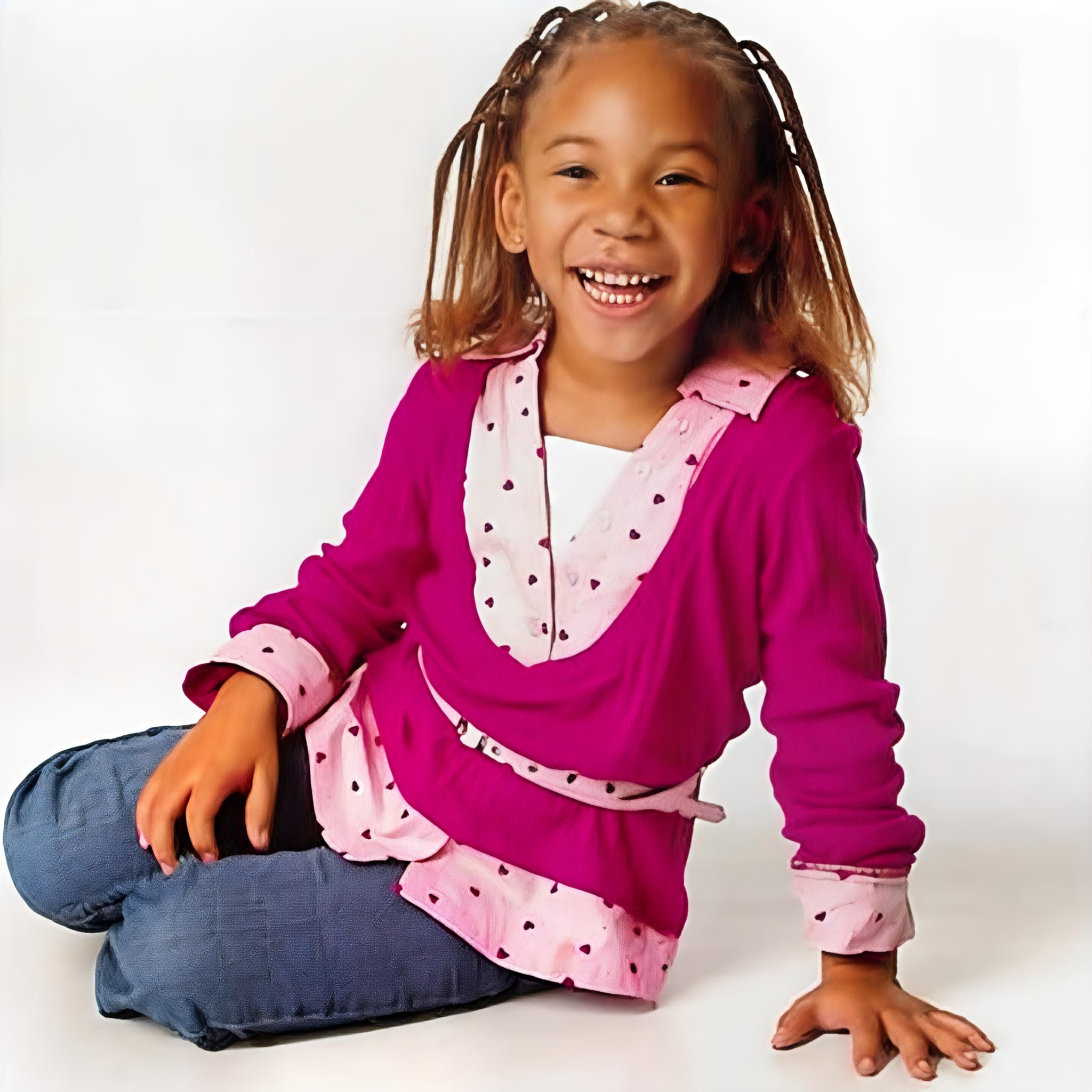
REMEMBERING GIZZELL
Gizzell Kiara Ford was eight years old when she died.
Known affectionately as “Gizzy,” Gizzell was bright, loving and academically gifted. She was a straight A student who had once lived happily with her mother, Sandra Mercado, and her maternal family.
People who knew Gizzell described her as bubbly, smart and a blessing.
Gizzell also loved to write.
She kept a journal, filling its pages with her thoughts, hopes and eventually the painful reality of what was happening inside her home.
Even while her life was becoming increasingly frightening, Gizzell still imagined a future for herself.
In one of the most enduring lines from her journal, she wrote that she was going to become a beautiful, smart and good young lady.
Gizzell never got the opportunity to become that young woman.
But the words she left behind ensured that her voice survived.
GIZZELL’S STORY
Gizzell had previously lived with her mother, Sandra Mercado.
In December 2012, during a custody dispute, a Cook County judge awarded temporary custody of Gizzell to her father, Andre Ford.
Andre was seriously ill with scleroderma and lived with his mother, Helen Ford, in a West Side Chicago apartment.
Gizzell went to live with them.
Her mother tried to regain custody, but the court did not return Gizzell to her care.
During the months that followed, Gizzell became increasingly isolated from members of her maternal family.
Relatives later said they encountered excuses when they tried to speak with or see her.
Inside the apartment, Gizzell was being subjected to prolonged abuse and deprivation.
She was beaten.
She was restrained.
She was deprived of food, water and sleep.
Evidence presented in court showed that she was sometimes tied to a pole attached to her father’s bed and beaten.
She was forced to perform exhausting physical exercises as punishment.
Her condition deteriorated.
Yet Gizzell continued writing in her journal.
As the abuse worsened, her handwriting became weaker and her entries increasingly reflected fear, self blame and despair.
There were opportunities for people outside the apartment to see Gizzell before she died.
In June 2013, approximately one month before her death, Gizzell was examined by a child abuse pediatrician after making an allegation involving her mother’s boyfriend.
During that examination, the doctor observed marks on the backs of Gizzell’s thighs and another faint mark on her body.
The doctor did not conclude that the marks were suspicious for physical abuse.
Gizzell returned to the home.
By July, she was severely injured and dangerously dehydrated.
On July 12, 2013, Chicago firefighters and paramedics were called to the apartment for a report of someone not breathing.
When emergency responders entered the home, they found Gizzell dead.
Her body showed extensive evidence of recent and older injuries.
An autopsy determined that Gizzell had suffered blunt force trauma and strangulation.
She had also been deprived of adequate food and water to such an extent that her kidneys were beginning to fail.
Her death was ruled a homicide.
Gizzell was eight years old.
SYSTEM FAILURES & WARNING SIGNS
Gizzell’s death occurred despite involvement from multiple systems intended to protect children.
The custody dispute that resulted in her placement with Andre was handled through the court system.
Her mother attempted to regain custody.
During the months before Gizzell died, the Illinois Department of Children and Family Services had contact involving her.
In June 2013, Gizzell underwent a specialized medical examination after reporting possible sexual abuse involving her mother’s boyfriend.
During that examination, the physician documented marks on Gizzell’s body.
The physician determined that those marks were not suspicious for abuse and communicated his findings to DCFS.
Gizzell returned to the home where Helen and Andre were caring for her.
She died approximately one month later.
After Gizzell’s death, her mother and maternal grandfather pursued a wrongful death lawsuit alleging that opportunities to protect Gizzell had been missed.
A jury ultimately found the physician who examined Gizzell negligent for failing to report signs of abuse.
The family was awarded $48 million.
Gizzell’s case demonstrated how dangerous it can be when individual warning signs are considered separately instead of as pieces of a larger picture.
There had been court involvement.
There had been DCFS involvement.
There had been a specialized child abuse examination.
There were injuries.
Her mother was attempting to regain custody.
And Gizzell was becoming increasingly isolated from members of her family.
Still, she remained in the home.
Her journal eventually documented what the systems surrounding her had failed to uncover in time.
JUSTICE FOR GIZZELL
Helen Ford was arrested shortly after Gizzell’s death and charged with first degree murder.
Andre Ford was also charged in connection with his daughter’s death.
Andre never went to trial.
He died in the Cook County Jail in 2014 while awaiting trial.
Because he died before his case could be adjudicated, there was no conviction and no legal determination of guilt against him.
Helen Ford proceeded to a bench trial.
In March 2017, Cook County Judge Evelyn Clay found Helen guilty of first degree murder.
The judge concluded that Gizzell’s death had involved prolonged torture and described the child's suffering as slow and agonizing.
In June 2017, Helen was sentenced to spend the remainder of her life in prison.
Helen Ford
Relationship to Gizzell: Paternal Grandmother
Conviction(s): First degree murder
Sentence: Natural life in prison
FOREVER REMEMBERED
Gizzell left something behind that most eight year old children never expect anyone outside their family to read.
Her own words.
Her journal became evidence in the prosecution of her grandmother, but it was more than evidence.
It was Gizzell’s voice.
Its pages showed a bright child trying to understand a world that had become increasingly cruel and confusing.
They also preserved something the abuse could not completely take from her: her ability to imagine herself beyond it.
Gizzell believed she could grow into a beautiful, smart and good young woman.
She should have been right.
She should have returned to school.
She should have continued earning good grades.
She should have filled notebooks with ordinary childhood thoughts rather than documenting fear and punishment.
She should have had the opportunity to grow old enough to reread her childhood journals and barely recognize the little girl who had written them.
Instead, the adults and systems surrounding Gizzell failed to protect her before she reached her ninth birthday.
Her case eventually produced a murder conviction, a life sentence and a multimillion dollar civil verdict.
None of those outcomes could fulfill the future Gizzell had imagined for herself.
But her voice remains.
Gizzell Kiara Ford was a straight A student.
She was bright.
She was bubbly.
She was loved by members of her family who fought to get her back.
And she was a little girl who believed she had a future.
Her final months deserve to be told truthfully.
Her life deserves to be remembered for more than those months.
Abuse Angels remembers Gizzell Kiara Ford.
Remembered. Honored. Never Forgotten.
