November 2, 2007 – March 28, 2009
Age: 16 Months
Location: LaGrange County, Indiana
Suspect in death: Christy Shaffer, Relative Caregiver
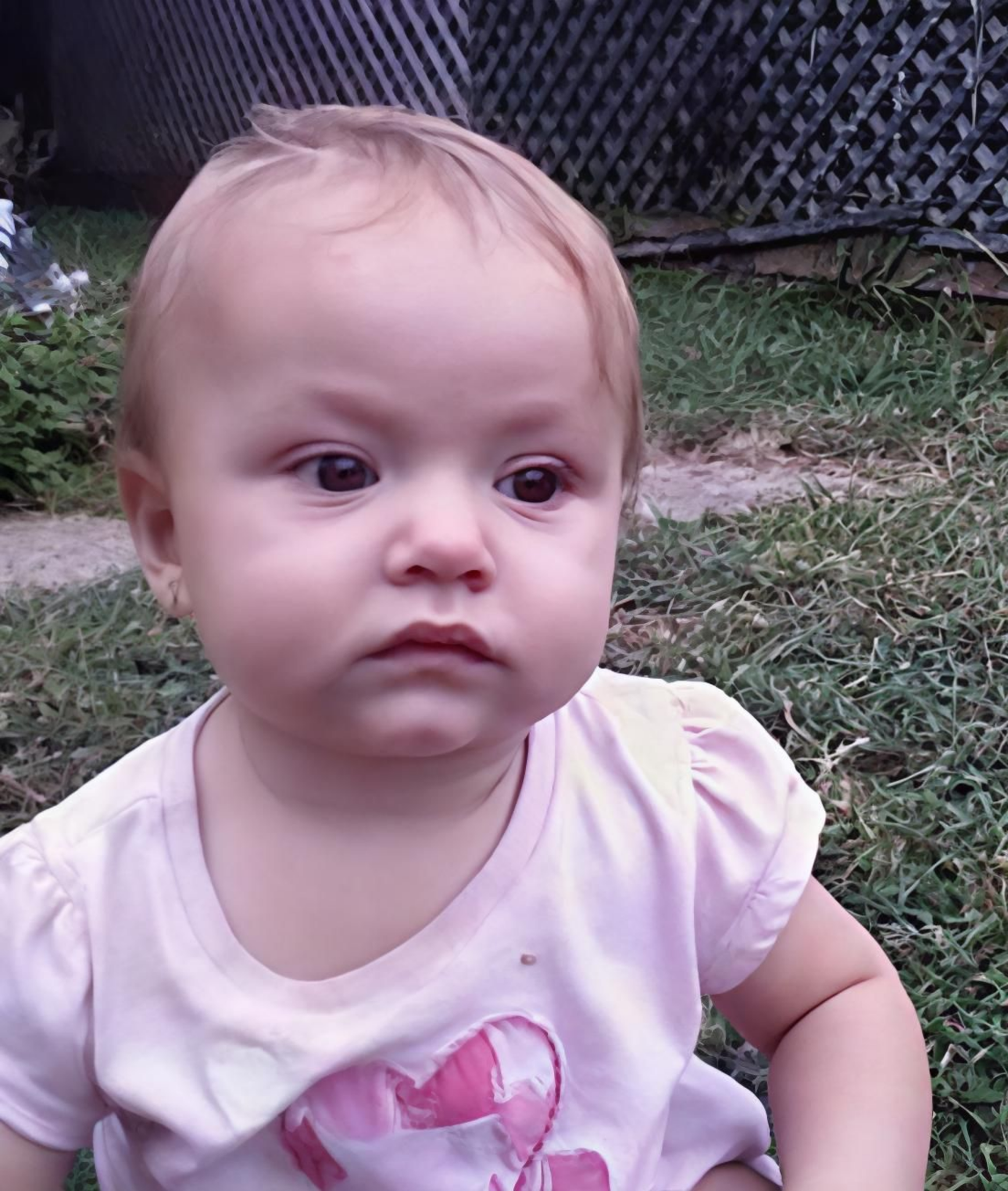
REMEMBERING ALISSA
Alissa Beth Guernsey was 16 months old when she died.
She was the youngest of three children and the daughter of Kelli Sprunger and Michael Guernsey.
Alissa had blonde hair and brown eyes. Her family remembered her as a happy, playful little girl who loved to snuggle.
Her mother had a special nickname for her, calling Alissa her “bitty pretty.”
Alissa and her mother even shared the same birthday, November 2.
In November 2008, shortly after Alissa celebrated her first birthday, her father Michael was killed in a car accident.
The loss devastated the family.
Within weeks, Alissa's life changed again.
She and her siblings were placed outside their mother's home.
The placement was supposed to keep Alissa safe.
Instead, she would spend the final months of her life in the home where she died.
ALISSA’S STORY
Following Michael's death, Kelli struggled with grief and substance abuse and recognized that she was not able to properly care for her children.
She left them temporarily with her cousin, Christy Shaffer.
The Indiana Department of Child Services already had an open case involving the family.
On December 16, 2008, a court considered a petition alleging that Alissa was a Child in Need of Services.
The court determined that Alissa should remain outside her mother's home and ordered that she stay with Christy under the supervision of the Department of Child Services.
When Alissa entered Christy's care, a physician examined her.
Her December 10 physical examination was considered normal.
That would change dramatically over the following months.
Alissa began developing unexplained injuries.
She had bruises.
She suffered cuts and other injuries.
Her hair began disappearing.
She also suffered a fractured arm.
Alissa was repeatedly taken for medical care.
Her primary physician knew about the injuries and communicated information about Alissa's condition to the Department of Child Services, but he did not believe at the time that she was being abused.
Instead, doctors investigated whether there might be a medical explanation for the bruising and other symptoms.
On March 3, 2009, Alissa was referred to a pediatric oncologist at Riley Hospital for Children.
She was examined there two days later.
Doctors tested her for conditions that could cause abnormal bruising, including blood disorders and leukemia.
The testing was normal.
No medical explanation was found that accounted for what was happening to Alissa.
Still, she remained in Christy's home.
On March 17, a court formally adjudicated Alissa a Child in Need of Services because of her mother's substance abuse.
Once again, the court determined that remaining with Christy was in Alissa's best interest.
Less than two weeks later, Alissa was dead.
On March 28, 2009, Alissa became unresponsive while in Christy's care.
Emergency help was eventually summoned, and attempts were made to resuscitate her.
Alissa could not be saved.
The examination after her death revealed extensive bruising and injuries.
The fatal injury was blunt force trauma to her head.
Her death was ruled a homicide.
She was 16 months old.
SYSTEM FAILURES & WARNING SIGNS
Few parts of Alissa's case are more difficult than the number of opportunities adults had to recognize that something was happening to her.
Alissa was not hidden from the world.
She was seen by doctors.
She was under the supervision of the Indiana Department of Child Services.
Her placement had been approved by a court.
And her injuries were visible.
When Alissa was first examined after entering Christy's care, her physical condition was within normal limits.
Over the next three months, she developed bruising, lacerations, hair loss and a fractured arm.
Her physician communicated with DCS but believed there might be a medical explanation for her injuries.
Alissa was eventually sent to specialists.
Testing for medical conditions that might explain her bruising came back normal.
Yet she remained in the same placement.
On March 17, 2009, the juvenile court again determined that Alissa should remain with Christy.
Eleven days later, Alissa died from blunt force trauma.
Years later, Alissa's mother brought litigation alleging that her daughter's physician failed to recognize and report the abuse.
A medical review panel did not find that the physician had failed to meet the applicable standard of care, and the malpractice case was ultimately unsuccessful.
But when the Indiana Court of Appeals later reviewed the history surrounding Alissa's death, the court made an unusually direct observation.
Alissa had been placed outside her mother's home because the child welfare system was supposed to provide her with a safe and stable environment.
Instead, she died while in the placement that system had approved and supervised.
The appellate court concluded plainly that the system had failed Alissa.
She was 16 months old.
She could not tell a caseworker what was happening.
She could not explain why she was bruised.
She could not explain how her arm had been broken.
Her injuries had to speak for her.
They were not understood in time.
JUSTICE FOR ALISSA
Alissa's death was ruled a homicide, but Christy Shaffer was not convicted of killing her.
A grand jury considered the evidence surrounding Alissa's death and indicted Christy on two felony counts of neglect of a dependent.
In 2011, Christy pleaded guilty to one felony count of neglect of a dependent.
She continued to deny inflicting Alissa's fatal injuries.
Christy was initially sentenced to ten years, with six years suspended.
That left four years to be served.
Only months later, the judge modified her sentence.
Christy was released after approximately 77 days in custody and placed on probation.
Her unusually short period of incarceration became the subject of public criticism and efforts by advocates seeking additional justice for Alissa.
Christy later violated probation after becoming involved in separate methamphetamine related criminal offenses.
That later criminal activity resulted in additional incarceration, but it did not change her conviction in Alissa's case.
Christy Shaffer
Relationship to Alissa: Relative Caregiver
Conviction: Neglect of a dependent
Sentence: 10 years, with 6 years suspended; sentence later modified after approximately 77 days served
FOREVER REMEMBERED
Alissa was placed in foster care because adults had decided she needed a safer place to live.
That fact makes what happened next especially painful.
She did not disappear into an unknown household where nobody knew she existed.
A court knew where Alissa was.
Child welfare officials knew where she was.
Doctors examined her.
Her injuries accumulated in front of adults who were responsible for understanding what they meant.
And still, Alissa died.
Years later, courtrooms would be filled with arguments over responsibility.
There would be criminal proceedings, civil litigation, appeals and public campaigns demanding greater accountability.
But before any of those things existed, there was simply Alissa.
A little girl with blonde hair and brown eyes.
A baby who loved to snuggle.
The youngest of three siblings.
A daughter who shared a birthday with her mother and had already endured the loss of her father before she was old enough to understand what death meant.
Her mother called her “bitty pretty.”
That is worth preserving.
Because Alissa should not exist in memory only as bruises documented in medical records or photographs introduced into court.
She should be remembered for the child she was before those records existed.
She should have grown up alongside her brother and sister.
She should have celebrated a second birthday with her mother on their shared day.
Then a third.
Then a fourth.
She should have been given enough years that the first 16 months of her life became only the beginning of her story.
Instead, they became all of it.
The systems surrounding Alissa were examined long after her death.
The criminal case ended.
The civil cases ended.
Alissa's childhood should not have ended with them.
Her name remains.
Abuse Angels remembers Alissa Beth Guernsey.
Remembered. Honored. Never Forgotten.
