April 14, 2009 – February 2, 2011
Age: 21 Months
Location: Aurora, Colorado
Suspects in death: Donald Jean Scarlett, Mother’s Boyfriend; Roseanna Key, Mother
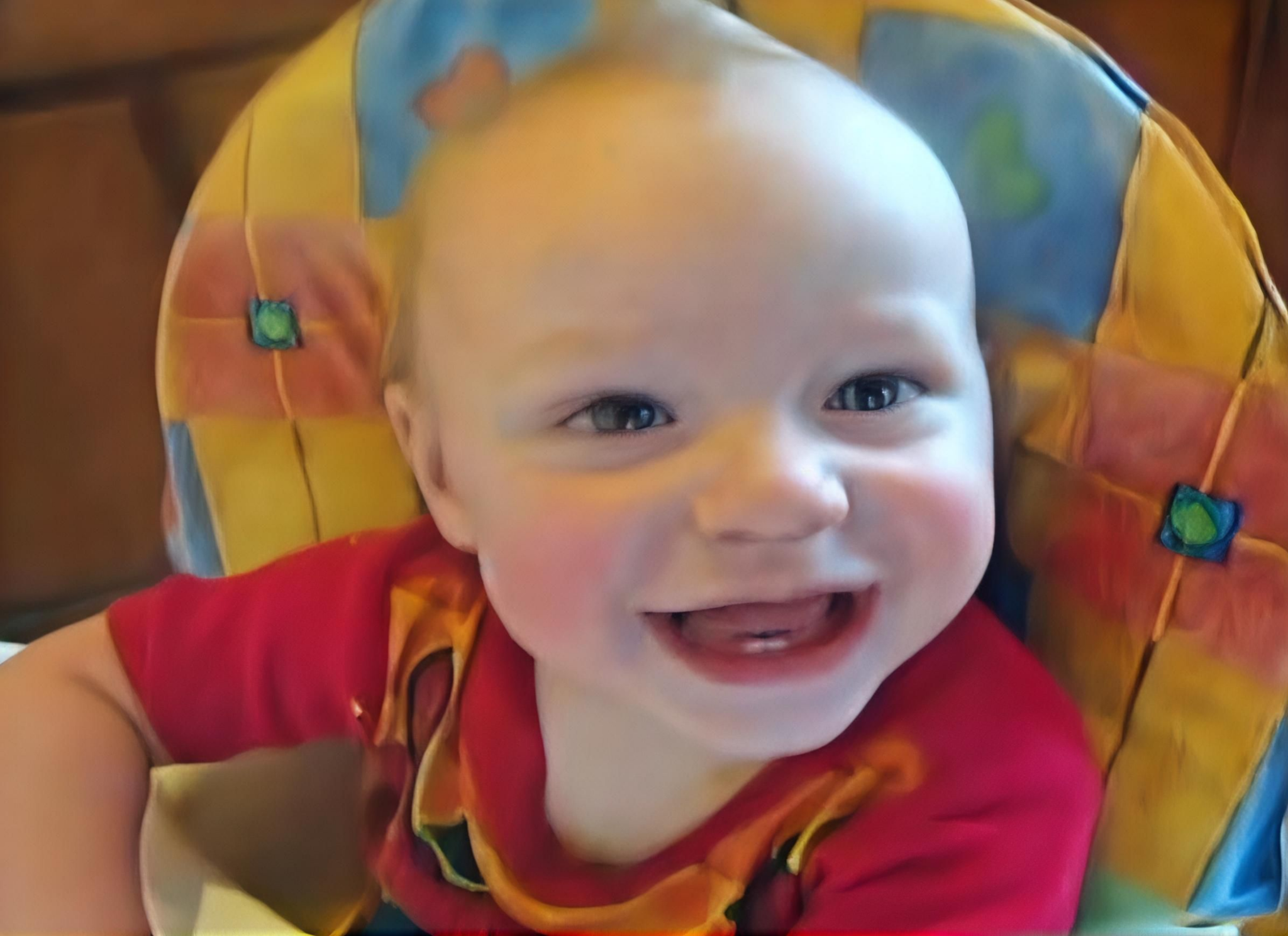
REMEMBERING MICHAEL
Michael Ryan Harris was only 21 months old when he died.
He was the youngest of Roseanna Key’s three sons.
Michael was still a toddler. He was at an age when crying was communication, when he needed adults to provide his food, keep his surroundings safe and comfort him when he was frightened or hurt.
For much of Michael’s short life, adults outside his family were aware that things around him were not safe.
He spent time in foster care.
He was returned to his mother.
Only weeks later, he was dead.
The records surrounding Michael contain page after page about social workers, assessments, court decisions, substance abuse, neglect and eventually criminal proceedings.
But Michael was never supposed to become a child welfare case remembered for what went wrong.
He was supposed to grow up.
MICHAEL’S STORY
Concerns about Michael began on the day he was born.
Both Michael and his mother tested positive for marijuana. Roseanna acknowledged using the drug, and the matter was eventually closed.
The family came to the attention of Adams County Human Services again in May 2010.
A caseworker found the home so cluttered that moving through it was difficult. Drug paraphernalia and choking hazards were within reach of the young children.
Roseanna admitted using marijuana and reported that other adults who regularly cared for the children used marijuana and methamphetamine.
Michael and his siblings were removed from the home.
His oldest brother went to live with his father, while Michael and another brother entered foster care.
During the following months, Roseanna participated in services that included parenting education, therapy and substance abuse treatment. She obtained housing and employment.
Michael and his brother were eventually returned to her care in December 2010.
By then, Roseanna was in a relationship with Donald Scarlett.
Donald sometimes cared for the boys while Roseanna worked.
There were soon additional warning signs.
Michael’s older brother suffered a significant head injury only days before Michael was fatally assaulted.
Then came the final night of Michael’s life at home.
Roseanna later admitted hearing Michael crying and screaming while he was alone with Donald.
She heard the toddler’s cries continue until they suddenly stopped.
She did not enter the room to check on him.
She did not seek medical help for him that night.
The following morning, Roseanna left Michael in Donald’s care and went to work.
On February 1, 2011, Donald called 911 and reported that Michael was not breathing.
Brighton police and emergency responders arrived.
Michael had no pulse.
He was rushed to Platte Valley Medical Center and then transferred to Children’s Hospital Colorado in Aurora.
Doctors discovered catastrophic injuries.
Michael had suffered severe trauma to his head and body, including injuries to internal organs and his spine.
His injuries were so extensive that doctors determined they could not be surgically repaired.
Michael remained alive into the following day.
On February 2, 2011, he died at Children’s Hospital Colorado.
He was 21 months old.
SYSTEM FAILURES & WARNING SIGNS
Michael’s death became one of Colorado’s most prominent examples of a child dying after extensive involvement with the child welfare system.
Adams County Human Services knew Michael from infancy.
By May 2010, conditions in his home had become serious enough that he and his siblings were removed.
Michael spent months in foster care.
He was returned to his mother in December 2010 after Roseanna completed required services.
Within weeks, new warning signs emerged.
Only three days before Michael’s fatal assault, his older brother suffered a serious head injury.
At Donald’s sentencing, District Court Judge Chris Melonakis sharply criticized the response to that injury.
The judge believed social workers should have examined Michael as well.
Had Michael been medically evaluated, the judge said, there were indications of abuse that could have resulted in the children being removed from the home.
That examination never happened.
Michael was fatally assaulted days later.
The judge’s criticism of Adams County Human Services was extraordinary.
He stated from the bench that the failures were serious enough that he believed the conduct should be examined by a grand jury.
Adams County disputed the judge’s characterization, explaining that child welfare placement decisions involved numerous professionals and were based on the information available at the time.
But the central facts remained.
Michael had already been removed once.
He had already spent months in foster care.
He had only recently been returned home.
His brother suffered a concerning injury.
Michael remained there.
Days later, he was dying in a hospital.
Michael had not slipped completely outside the child protection system.
The system knew his name.
It knew his family.
It had already decided once that his home was unsafe.
And it still did not reach him in time.
JUSTICE FOR MICHAEL
Roseanna Key was charged in connection with her son’s death.
She admitted hearing Michael crying and screaming during the assault but failing to intervene or obtain help.
Roseanna ultimately pleaded guilty to criminally negligent child abuse resulting in death.
In February 2013, she was sentenced to 16 years in prison.
Donald Scarlett initially faced first degree murder of a child by a person in a position of trust.
His case went to trial.
In February 2013, a jury found Donald guilty of criminally negligent child abuse resulting in death and reckless manslaughter.
On April 11, 2013, Judge Chris Melonakis sentenced Donald to 42 years in prison.
Donald Jean Scarlett
Relationship to Michael: Mother’s Boyfriend
Conviction: Criminally negligent child abuse resulting in death; reckless manslaughter
Sentence: 42 years in prison
Roseanna Key
Relationship to Michael: Mother
Conviction: Criminally negligent child abuse resulting in death
Sentence: 16 years in prison
FOREVER REMEMBERED
Michael was not an invisible child.
That may be one of the hardest parts of his story.
People knew him.
Caseworkers knew his family.
Reports existed.
Assessments were completed.
He was removed from his home.
He lived in foster care.
Adults made decisions about when it would be safe for him to return.
Michael was surrounded by a system created specifically to protect children like him.
Still, he died.
After his death, there was another indignity.
Months passed without Michael being buried.
His mother had been arrested, and authorities could not locate his biological father.
Eventually, people who had never known Michael personally stepped forward.
A funeral home, a monument company and the City of Brighton worked together to provide the little boy with a burial place, headstone and service.
Michael finally received a place where his name could remain.
But he deserved far more than a grave.
He deserved to turn two.
He deserved to grow beyond the toddler whose crying irritated an adult.
He deserved ordinary mornings and ordinary nights.
He deserved brothers he could grow up beside.
He deserved school.
Birthdays.
Friends.
A future.
Michael Ryan Harris spent only 21 months in this world.
During that short life, adults repeatedly discussed what was best for him.
After his death, judges, lawyers, social workers and officials debated what should have been done differently.
Michael never had the opportunity to join that conversation.
His needs had always been simpler.
He needed to be safe.
He needed someone to protect him.
He needed someone to come when he cried.
Abuse Angels remembers Michael Ryan Harris.
Remembered. Honored. Never Forgotten.
