June 2003 – November 26, 2007
Age: 4 years old
Location: Connah's Quay, Flintshire, Wales, United Kingdom
Suspect in death: Joanne Hill, Mother
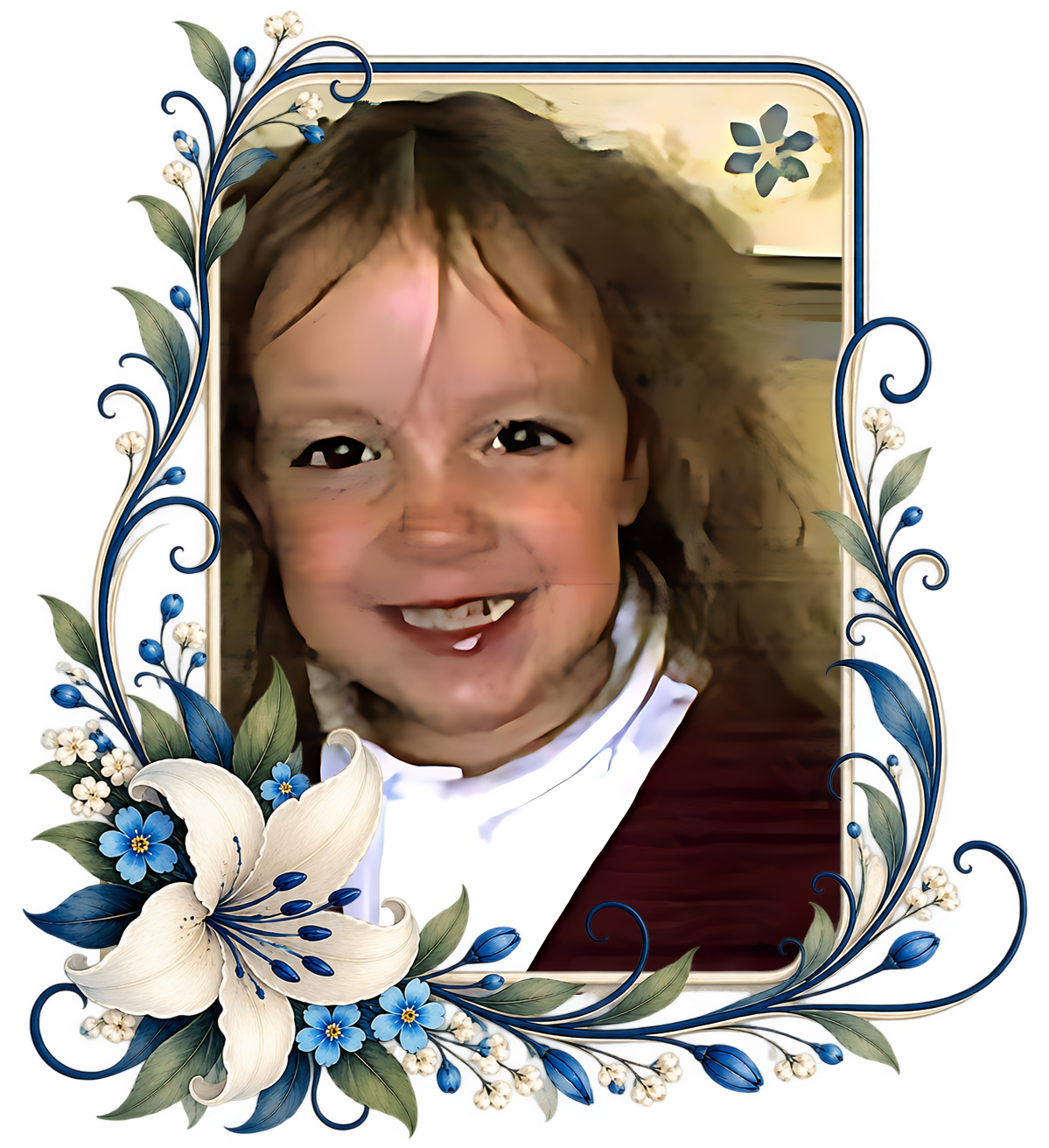
REMEMBERING NAOMI
Naomi Hill was just 4 years old when her life was tragically taken on November 26, 2007, in Connah's Quay, Wales. A precious little girl who lived with mild cerebral palsy and hearing difficulties, Naomi was deeply loved by her father, Simon Hill, who described his daughter as an inspiration who embraced life.
Born prematurely in June 2003, Naomi faced challenges from the beginning of her life. Her cerebral palsy affected her ability to walk, and she wore leg supports to help with her mobility.
She also experienced some hearing difficulties.
But Naomi was so much more than her medical conditions. She was a little girl who attended school, enjoyed the world around her, and brought happiness to those who loved her.
Her father adored her and refused to allow her disability to define who she was or what she could accomplish.
Sadly, Naomi's mother, Joanne Hill, struggled to accept her daughter's disabilities.
During the criminal proceedings, prosecutors described how Joanne had become embarrassed by Naomi's condition and had even suggested placing her daughter for adoption.
Simon refused. He loved Naomi and wanted her to remain part of their family.
On November 26, 2007, Naomi's life was taken by the very person who should have protected her.
Naomi's Story
Naomi was born in June 2003, approximately ten weeks prematurely. Her early arrival was followed by a diagnosis of mild cerebral palsy, a condition that affected her mobility.
As she grew, Naomi required leg supports to help her walk and experienced some hearing difficulties.
Despite these challenges, she was an active little girl who attended Golftyn Primary School in Connah's Quay.
Her father, Simon Hill, was devoted to her.
He supported her development and believed that her disability did not prevent her from living a happy and meaningful life.
Her mother, Joanne Hill, had experienced significant mental health difficulties over many years, including depression and anxiety.
Following Naomi's birth, she also experienced serious postnatal depression.
During the years that followed, Joanne received treatment from mental health professionals.
Her condition fluctuated, and she experienced periods of improvement as well as episodes of significant distress.
According to testimony presented during her trial, Joanne struggled with Naomi's cerebral palsy and felt embarrassed by the leg supports her daughter wore.
She reportedly insisted that Naomi wear trousers to conceal them.
Joanne also suggested that Naomi be placed for adoption or foster care, but Simon refused because he loved his daughter and wanted to continue raising her.
By late 2007, the marriage between Joanne and Simon had deteriorated.
Joanne was drinking heavily, and her behavior had become increasingly concerning.
On November 26, 2007, Joanne went to work in Chester before collecting Naomi from her childminder.
She then took her daughter home to the family's residence in Goya Close, Connah's Quay.
Later that evening, Joanne prepared a bath for Naomi.
According to evidence presented during the trial, Naomi did not want to take a bath.
Nevertheless, Joanne carried her upstairs, undressed her, and placed her in the water.
Joanne then deliberately held Naomi's head beneath the water.
During police interviews, Joanne admitted that she had held her daughter underwater for several minutes.
Naomi was unable to escape.
The little girl who had overcome so many challenges during her short life was killed by her own mother.
After Naomi died, Joanne removed her from the bath, dried her, and dressed her in blue denim dungarees and a pink and yellow top.
She placed Naomi in a child seat in the family's car and left the house before Simon returned from work.
Unaware of what had happened, Simon sent Joanne a text message asking whether Naomi was safe.
He received no reply.
For approximately eight hours, Joanne drove around the Deeside and Chester areas with Naomi's body in the vehicle.
During that time, she stopped to purchase alcohol and petrol.
Surveillance footage later showed her interacting with employees at a petrol station.
In the early hours of November 27, 2007, Joanne arrived at the Countess of Chester Hospital carrying Naomi.
Medical staff attempted to revive the little girl, but it was far too late.
Naomi was pronounced dead shortly afterward.
Her death devastated her father, who had spent Naomi's life loving, supporting, and protecting her.
Warning Signs and System Failures
Naomi's death raised serious questions about the warning signs that existed before the tragedy and whether additional intervention might have helped protect her.
Joanne Hill had a documented history of mental health difficulties dating back to her teenage years.
Following Naomi's birth, she experienced serious postnatal depression and received support from mental health professionals.
In late 2006, Joanne suffered another significant relapse and temporarily left the family home to receive care from her parents.
During early 2007, she received intensive treatment, including visits from mental health nurses.
Her condition subsequently improved, and she returned to work.
By August 2007, her specialist mental health case had been closed, although she continued receiving medication and care through her general practitioner.
In the months leading up to Naomi's death, however, concerns about Joanne's behavior increased.
She had begun drinking heavily, and her marriage was deteriorating.
Naomi's childminder later testified that she had sometimes felt uncomfortable allowing Naomi to leave with her mother because Joanne appeared to have been drinking or was behaving unusually.
Simon also described returning home to find Joanne intoxicated while Naomi slept in the living room.
These circumstances raised concerns about Joanne's ability to provide safe and consistent care.
Following Naomi's murder, Flintshire's Local Safeguarding Children Board commissioned a Serious Case Review to examine the involvement of health and social care services with the family.
The review's findings were released in September 2009.
Investigators did not identify serious failings by the health and social care professionals involved.
However, the review recommended improvements in several areas, including communication with family members, coordination of mental health crisis services, gathering information from people making referrals, and consideration of maternal mental health needs.
The recommendations were accepted by the local council.
Naomi's case highlighted the importance of listening to concerns raised by family members and caregivers, recognizing changes in a parent's ability to provide safe care, and ensuring that children remain protected when serious difficulties arise within a household.
It also raised broader concerns about the stigma surrounding disability and the importance of ensuring that children with additional needs are treated with dignity, acceptance, and love.
Naomi's cerebral palsy did not diminish her worth or make her life any less meaningful.
She deserved to be celebrated for who she was.
JUSTICE FOR NAOMI
Following Naomi's death in November 2007, her mother, Joanne Hill, was arrested and charged with murder.
During the investigation, Joanne admitted that she had deliberately held Naomi underwater in the bathtub until she stopped moving.
However, she denied being legally responsible for murder, arguing that her mental health condition had substantially impaired her responsibility for her actions.
Joanne admitted manslaughter on the grounds of diminished responsibility, but prosecutors rejected that explanation and proceeded with the murder charge.
Her trial took place at Chester Crown Court in September 2008.
During the proceedings, prosecutors presented evidence concerning Joanne's behavior before and after Naomi's death, including her statements to police, her drinking, and the hours she spent driving with Naomi's body in the car.
The court also heard testimony about her history of mental illness and the treatment she had received.
Psychiatrists called by the prosecution and defense offered differing opinions about her mental state at the time of Naomi's death.
The defense argued that Joanne had experienced a serious relapse of her psychiatric illness and that her responsibility for the killing had been diminished.
Prosecutors maintained that she understood her actions and had deliberately planned to kill Naomi because she could not cope with her daughter's disability.
After hearing the evidence, the jury rejected Joanne's diminished responsibility defense.
On September 23, 2008, Joanne Hill was found guilty of murder.
Judge Elgan Edwards sentenced her to life imprisonment with a minimum term of 15 years before she could be considered for release.
During sentencing, the judge emphasized Naomi's vulnerability and the profound breach of trust involved in a mother deliberately killing her own child.
Following the verdict, Naomi's father, Simon Hill, spoke publicly about his daughter and the devastating loss his family had suffered.
He rejected the idea that Naomi's cerebral palsy had prevented her from enjoying life, describing her as a little girl who lived fully and inspired those around her.
Joanne Hill
Relationship to Naomi: Mother
Conviction: Murder
Sentence: Life imprisonment with a minimum term of 15 years
FOREVER REMEMBERED
Naomi Hill was only 4 years old when her life was taken.
She was a precious little girl whose life was filled with possibilities, despite the challenges she faced from an early age.
Her cerebral palsy was only one part of who she was.
Naomi was a daughter, a student, and a little girl who deserved to be accepted and loved exactly as she was.
Her father saw the beauty and strength in his daughter.
He recognized her determination, celebrated her accomplishments, and believed in the future she deserved.
Naomi should have had the opportunity to continue learning, growing, making friends, and discovering everything the world had to offer.
She should have been able to celebrate more birthdays, experience the excitement of school, and create countless memories with the father who loved her so deeply.
Instead, her life ended before she reached her fifth birthday.
Her story is especially heartbreaking because the very condition that made her different was treated by her mother as something to be ashamed of.
But there was never anything shameful about Naomi.
She was worthy of love, patience, acceptance, and protection.
Her father's words following her death remind us that Naomi was not defined by what she found difficult.
She was a child who experienced joy, who inspired her family, and whose life held tremendous value.
Naomi's story also reminds us of the importance of protecting children with disabilities, challenging harmful attitudes, and ensuring that every child is treated with dignity and compassion.
Although her life was tragically short, Naomi deserves to be remembered for the little girl she was, not simply for the cruelty that ended her life.
Abuse Angels honors and remembers Naomi Hill, a precious little girl whose life was taken far too soon.
We remember her not for her disability or the violence she endured, but for the beautiful child she was and the future she deserved.
Her name was Naomi Hill.
She mattered.
She was loved.
And she will never be forgotten.
Abuse Angels remembers Naomi Hill.
Remembered. Honored. Never Forgotten.
