May 2, 2001 – May 17, 2008
Age: 7 years old
Location: Handsworth, Birmingham, England
Suspects in death: Angela Gordon, mother; Junaid Abuhamza, mother's partner
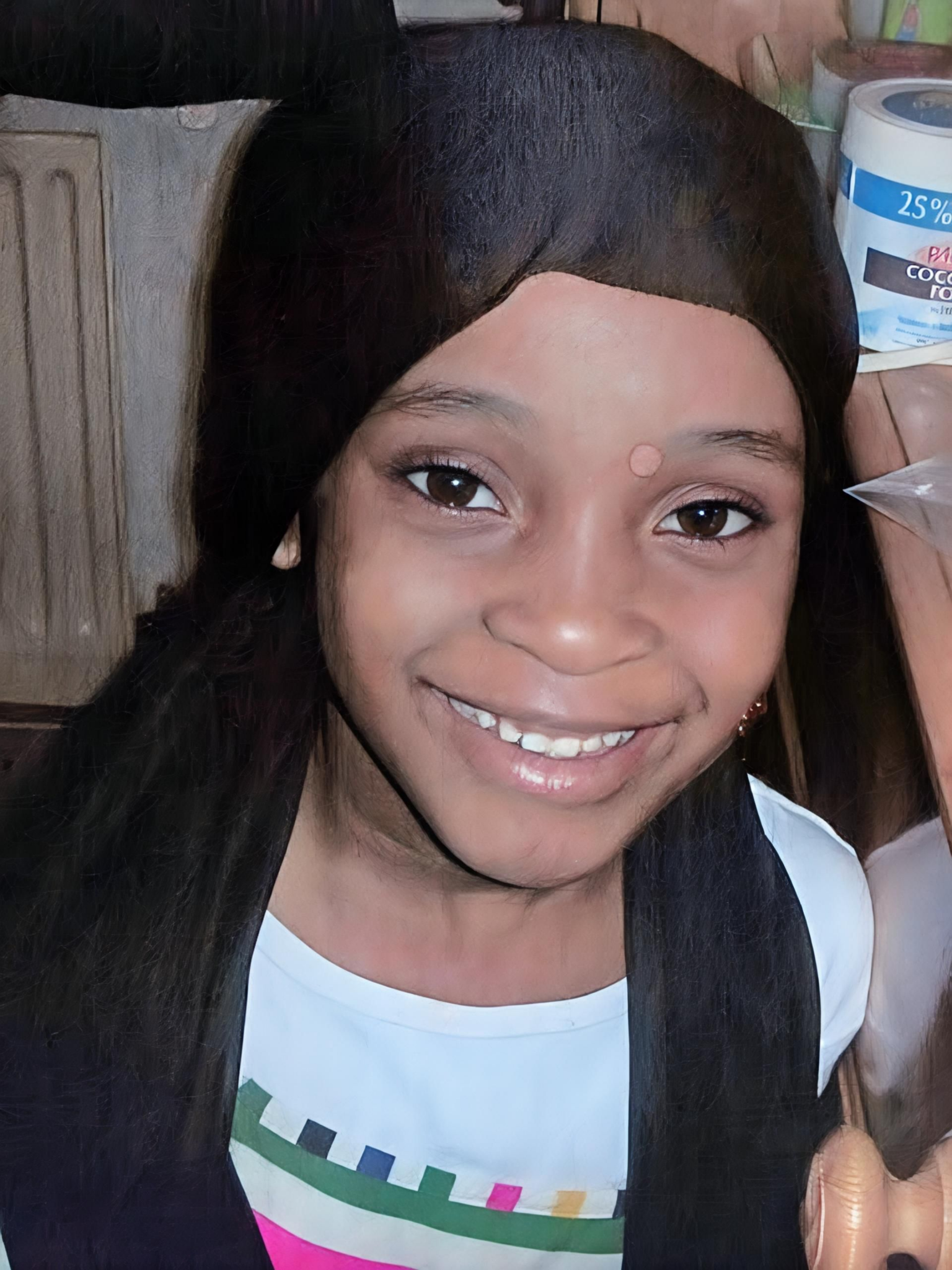
REMEMBERING KHYRA
Khyra Ishaq was seven years old. She was the second youngest of six children. Before the final months of Khyra's life became dominated by isolation, hunger and punishment, she was a little girl who attended school and lived among brothers and sisters who were growing up beside her. Khyra should be remembered as more than the child at the center of one of Britain's most disturbing child protection cases. She was seven. She should have been learning. Playing. Laughing with her siblings. Making friends. Discovering the things she loved. Instead, Khyra gradually disappeared from the view of the people outside her home who might have been able to protect her. By the time help finally reached her, it was too late. Her name was Khyra Ishaq. And what happened to her should never overshadow the simple truth that she was a child who deserved food, safety, affection and the chance to grow up.
KHYRA'S STORY
Khyra lived with her mother, Angela Gordon, her five siblings and Gordon's partner, Junaid Abuhamza, in Handsworth, Birmingham. Beginning in 2007, life inside the home changed significantly. Abuhamza increasingly influenced the family's routines, including how the children were fed and disciplined. Food became a method of punishment and control. Khyra and her siblings were subjected to an increasingly cruel regime. Food was withheld. The children became obsessed with finding something to eat. Khyra was accused of stealing food. Rather than recognizing that behavior as a possible sign that a child was hungry, food itself increasingly became part of the punishment inflicted upon her. Khyra and some of her siblings were eventually removed from school under the claim that they would be educated at home.
That decision further isolated them from teachers and other adults who had previously been able to see them regularly. Inside the home, Khyra's condition deteriorated. She was deprived of adequate food for months. She became severely malnourished. Her siblings were also malnourished to varying degrees and suffered nutritional deficiencies. On May 17, 2008, Angela Gordon called emergency services because Khyra was critically ill. Paramedics arrived at the family's home shortly before six in the morning. They found Khyra lying on a mattress in an upstairs bedroom. She was not breathing and had no heartbeat. Khyra was rushed to Birmingham Children's Hospital while resuscitation efforts continued. At 6:25 a.m., seven year old Khyra Ishaq was pronounced dead. She was profoundly malnourished. Her body mass index was so low that it could not even be plotted on the standard chart used in the Serious Case Review. Medical evidence established that Khyra had been significantly starved over a period of months. Her recorded cause of death was bronchial pneumonia and septicemia with focal bacterial meningitis, conditions that overwhelmed a body already devastated by severe malnutrition.
WARNING SIGNS & SYSTEM FAILURES
Khyra's death led to an extensive Serious Case Review by the Birmingham Safeguarding Children Board. Its conclusion was devastating. Khyra's death was preventable.
There had not been only one opportunity to protect her. There had been many. Members of the public had raised concerns about the family. Schools had concerns.
A health visitor had made a referral involving domestic abuse. Teachers noticed troubling behavior involving food. Professionals attempted to communicate concerns to children's social care. But information was not always properly recorded, shared or acted upon. In December 2007, Khyra's school requested a welfare check. Later, Angela Gordon removed Khyra and some of her siblings from school, saying they would be educated at home. That removed one of the children's most important regular points of contact with adults outside the family. Even then, opportunities remained. When education officials visited the home in February 2008, they spent approximately an hour discussing the home-education arrangements. The children were not seen. The Serious Case Review found failures across agencies. Concerns were sometimes viewed individually instead of being brought together to reveal the larger picture. Information was inadequately shared. Professionals did not always follow through. Between 1998 and 2008, the children in the family missed at least 129 professional appointments. Meanwhile, Khyra was disappearing from public view.
She was getting thinner. Hungrier. Weaker. And increasingly isolated. The Serious Case Review concluded that better assessments and effective communication between agencies could have prevented her death.
JUSTICE FOR KHYRA
Angela Gordon and Junaid Abuhamza were prosecuted in connection with Khyra's death and the cruelty inflicted upon the other children. Both were convicted of manslaughter. They were also convicted of causing or allowing the death of a child and five counts of child cruelty involving Khyra's surviving siblings. In March 2010, both were given indefinite prison sentences. Angela Gordon was ordered to serve a minimum of 15 years before she could be considered for release. Junaid Abuhamza was ordered to serve a minimum of seven and a half years.
Angela Gordon
Relationship to Khyra: Mother
Conviction: Manslaughter; causing or allowing the death of a child; child cruelty offenses
Sentence: Indefinite imprisonment, minimum 15 years
Junaid Abuhamza
Relationship to Khyra: Mother's partner
Conviction: Manslaughter; causing or allowing the death of a child; child cruelty offenses
Sentence: Indefinite imprisonment, minimum 7½ years
FOREVER REMEMBERED
Khyra Ishaq was seven years old. Much of what the world eventually learned about Khyra came from records describing what she was denied. Food. Freedom. School. Protection. And ultimately, life. But starvation was something inflicted upon Khyra. It was not who she was. Khyra was a little girl. She was a daughter. She was a sister to five other children. She was a schoolchild who should have had years of classrooms, playgrounds, friendships and birthdays ahead of her. There should have been an eighth birthday. Then a ninth. There should have been secondary school. Teenage years. Graduation. Adulthood. There should have been enough years for Khyra to leave that house behind and build a life of her own. Instead, she died at seven. After Khyra's death, professionals examined years of records and identified opportunity after opportunity when someone might have reached her. Those lessons matter. But Khyra should never become merely a lesson in a safeguarding report. She was the reason those lessons needed to be learned. Her name was Khyra Ishaq. Abuse Angels remembers Khyra Ishaq the seven year old little girl who slowly disappeared from the sight of the outside world, whose hunger should have been recognized as a cry for help, and whose death was officially determined to have been preventable. We remember Khyra. We speak her name. And Khyra Ishaq will not be forgotten.
