Unknown – July 17, 2008
Age: 2 years
Location: Eccles, Salford, Greater Manchester, England
Suspect in death: Karl McCluney, Babysitter
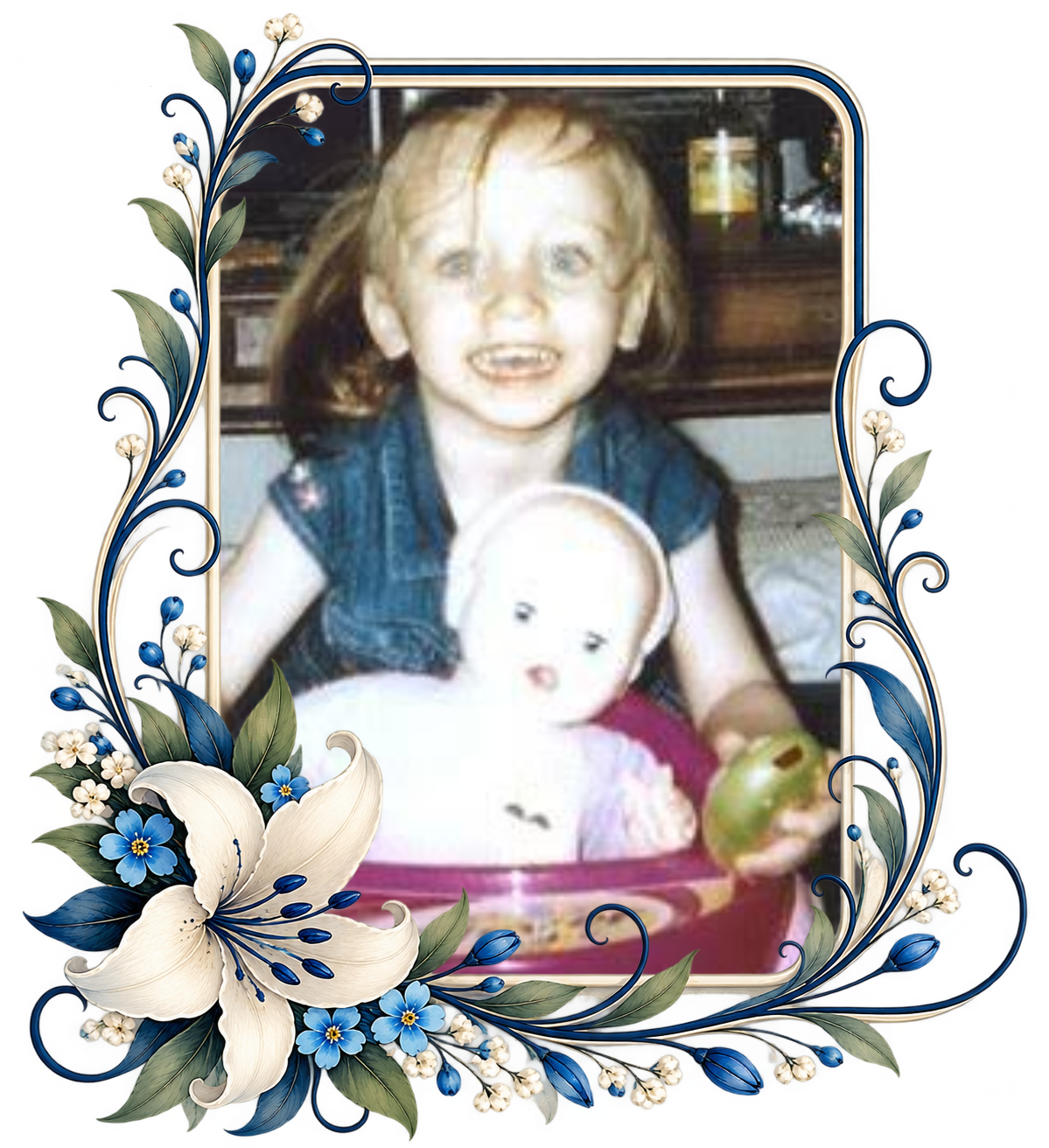
REMEMBERING DEMI
Demi Leigh Mahon was only two years old when her life ended in July 2008 in Greater Manchester, England.
Demi was the daughter of Ann Marie McDonald and had a father and paternal grandmother who later spoke publicly about their concerns for her safety.
She was a little girl who should have been spending her days playing, learning new words, and discovering the world around her.
Instead, Demi suffered a fatal assault while in the care of a 15 year old boy who had been entrusted with looking after her.
Her injuries were devastating. Medical professionals documented 68 separate injuries, including severe trauma to her head and face.
Demi survived the initial assault but suffered catastrophic brain damage. She died in hospital two days later.
Her murder prompted criminal proceedings and a serious case review examining the involvement of social services with her family.
Although much of the public record focuses on the circumstances of her death, Demi deserves to be remembered as more than the victim of a violent crime.
She was a daughter and granddaughter whose life mattered.
She deserved safety, patience, and the opportunity to grow up.
Demi's Story
On July 15, 2008, Demi was left in the care of Karl McCluney at a residence on Liverpool Road in Eccles, Salford.
McCluney was 15 years old that day.
Demi's mother, Ann Marie McDonald, had gone out to collect a child benefit payment and purchase a birthday card.
She expected to be away for approximately 90 minutes.
McCluney had previously cared for Demi, and her mother trusted him to watch her during the short absence.
During that time, McCluney took Demi to a nearby park.
They later returned to the residence.
According to evidence presented during his murder trial, McCluney became frustrated with Demi's behavior and crying.
He subjected the two year old girl to a sustained physical assault.
Demi was repeatedly punched in the face, kicked, and bitten.
The injuries documented by the forensic pathologist included extensive bruising and trauma to her head, face, and body.
Her ears showed injuries consistent with being pulled, pinched, or kicked.
She also had injuries believed to be bite marks on her arm and back.
Part of her scalp had been torn away, an injury the pathologist believed was likely caused by contact with a hard surface.
In total, medical experts documented 68 separate injuries.
The violence caused catastrophic brain damage.
Following the assault, McCluney left Demi injured and returned to watching television.
He did not immediately summon emergency medical assistance.
When Ann Marie returned, McCluney was outside the residence.
He told her that Demi had fallen while they were at the park and suggested that he might have accidentally hurt her while picking her up.
Ann Marie entered the home and found her daughter lying on a bed with bedding partly covering her face.
Demi was badly bruised, struggling to breathe, and unable to respond normally.
Her mother immediately recognized that something was seriously wrong.
Emergency services were contacted, and Demi was transported to Hope Hospital.
Doctors discovered severe brain injuries.
Despite medical treatment, her condition could not be reversed.
Demi's parents were at her bedside when life support was withdrawn two days after the assault.
Demi died on July 17, 2008.
The injuries found during her postmortem examination were inconsistent with an accidental fall.
The medical evidence established that Demi had suffered extensive physical violence.
She was too young to defend herself against the person responsible for caring for her.
She could not escape, call for help, or explain what had happened.
Her life ended because an adult responsible for her supervision failed to protect her from a violent assault.
Warning Signs and System Failures
Following Demi's death, Salford City Council conducted a serious case review examining the involvement of child protection agencies with her family.
The review considered concerns that had been raised about Demi's welfare before her murder.
Demi's father and paternal grandmother publicly criticized social services after the trial, saying they had expressed concerns about her safety.
The family's circumstances included concerns involving substance use and the stability of Demi's care.
Her mother, Ann Marie McDonald, had a history of heroin use.
The serious case review identified failures in the handling of earlier child protection concerns.
In particular, it found that the threshold for initiating a child protection investigation had been met but that an investigation had not been started.
This was a significant failure in the application of child protection procedures.
The review examined how professionals had assessed the family's circumstances and whether concerns about Demi's welfare had received an appropriate response.
However, the review also reached an important conclusion.
It determined that Demi's murder could not reasonably have been anticipated and therefore could not have been prevented on the basis of the information available to professionals at the time.
That finding must be distinguished from the separate conclusion that child protection procedures had not been properly followed.
The documented failures concerned the handling of earlier welfare concerns.
They did not establish that social workers knew Karl McCluney would attack Demi or had received a specific warning about the fatal assault.
Demi's case demonstrated the importance of responding appropriately when concerns about a child's safety reach protective services.
Even when a particular tragedy cannot be predicted, agencies remain responsible for following required procedures and carefully evaluating the welfare of vulnerable children.
She depended on adults to recognize danger, provide stability, and ensure that the people caring for her could be trusted.
The serious case review became part of the effort to examine how those responsibilities had been carried out.
For Demi, the findings came too late.
JUSTICE FOR DEMI
Following Demi's death in July 2008, Greater Manchester Police investigated the fatal assault.
Karl McCluney was charged with murder.
During the criminal proceedings, he admitted unlawfully killing Demi but denied murder on the grounds of diminished responsibility.
His defense presented evidence concerning his intellectual functioning, behavioral difficulties, and ability to regulate his emotions.
A psychiatrist described McCluney as having a conduct disorder and below average intellectual functioning.
The defense argued that these conditions substantially affected his responsibility for the killing.
Prosecutors maintained that McCluney was criminally responsible for murder.
At Manchester Crown Court, the jury heard evidence from medical experts describing Demi's 68 injuries.
The prosecution argued that the extent and nature of the injuries demonstrated a sustained and deliberate assault.
The jury rejected McCluney's defense of diminished responsibility.
On June 26, 2009, he was found guilty of murder.
On July 30, 2009, McCluney was sentenced to detention at His Majesty's pleasure, the form of life sentence imposed in England and Wales for murder committed by a person under 18.
The court set a minimum term of 15 years before he could be considered for release.
That minimum term did not guarantee release after 15 years.
Release required a separate assessment of whether continued detention remained necessary for public protection.
In 2024, McCluney's case was considered for parole.
Subsequent reporting in 2025 stated that he had been released following a Parole Board decision.
The reported release conditions included residence at an approved address, a curfew, and restrictions intended to prevent contact with Demi's family.
His release did not overturn his murder conviction.
He remained subject to the conditions of his life sentence.
Karl McCluney
Relationship to Demi: Babysitter
Conviction: Murder
Sentence: Detention at His Majesty's pleasure, with a minimum term of 15 years
Current status: Reported released on parole in 2025
FOREVER REMEMBERED
Demi Leigh Mahon was only two years old when her life ended.
Two years was not nearly enough time for her to experience the childhood she deserved.
She should have celebrated more birthdays, learned to read, made friends, and grown up surrounded by people who cared about her.
She should have been able to play without fear and trust that the adults around her would keep her safe.
Instead, her life ended after a violent assault that caused devastating injuries.
Her father and grandmother later spoke publicly about their concerns for her welfare.
Their grief and frustration became part of the public discussion surrounding her death.
But Demi's life deserves to be remembered beyond the failures identified in the serious case review and the criminal proceedings that followed.
She was a little girl.
She was a daughter and granddaughter.
She had a name, a family, and a future that deserved protection.
Demi should have been comforted when she cried.
She should have been treated with patience when she was upset.
She should have been safe with the person responsible for watching her.
No criminal sentence can restore the years taken from her.
No investigation can return the birthdays, milestones, and ordinary childhood moments she never had the chance to experience.
Her story reminds us that children depend on adults to respond safely to their needs and that concerns about their welfare must be taken seriously.
Demi deserved a lifetime of love, safety, and opportunity.
Her life mattered, and her name deserves to be remembered.
Abuse Angels remembers Demi Leigh Mahon.
Remembered. Honored. Never Forgotten.
