June 8, 1994 – June 14, 1997
Age: 3 years old
Location: Springfield, Oregon
Suspects in death: Jesse Caleb Compton, Mother's Boyfriend; Stella Ann Kiser, Mother
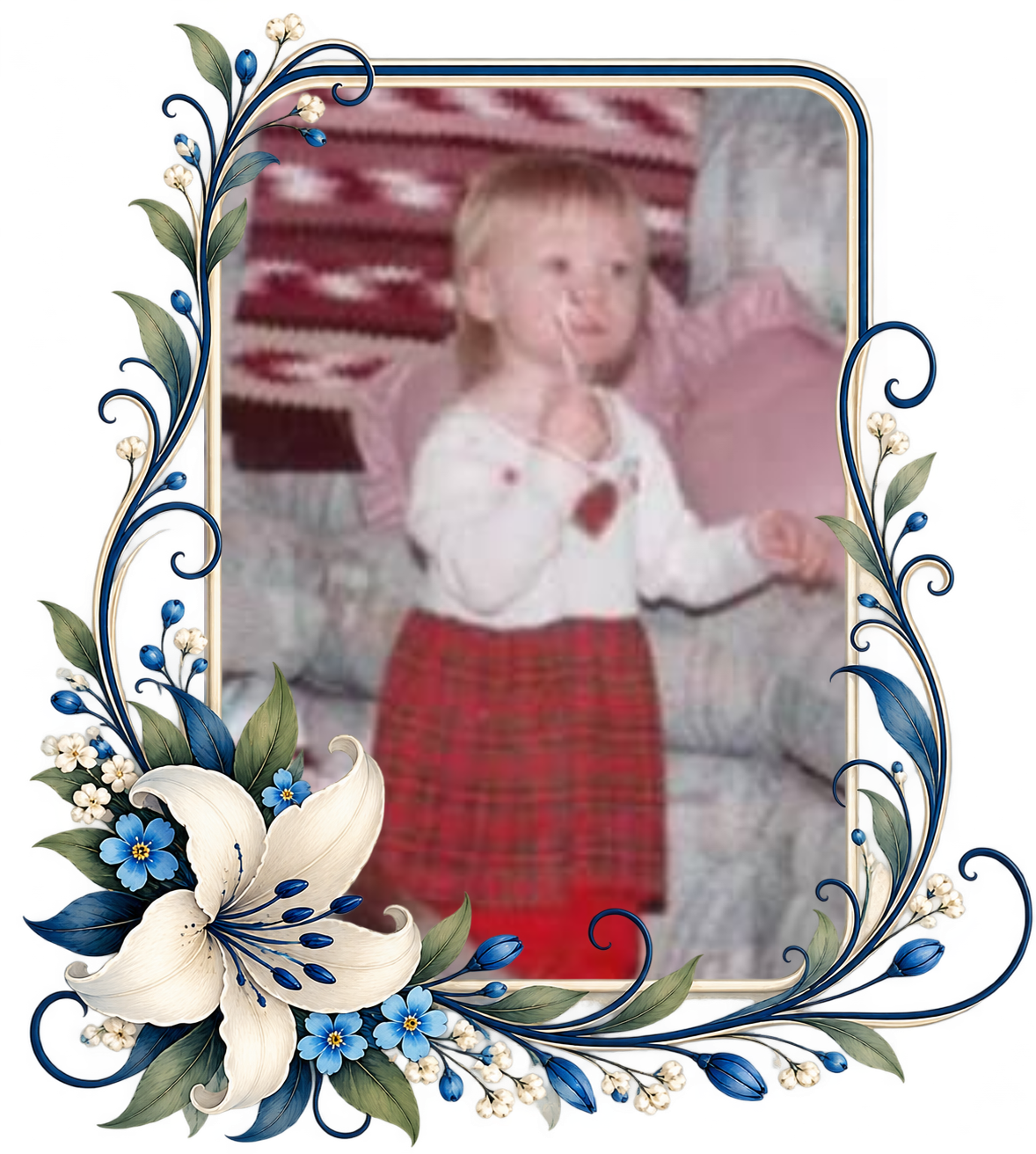
REMEMBERING TESSLYNN
Tesslynn Elizabeth O'Cull was born on June 8, 1994, in Upland, California.
She was the daughter of Jason O'Cull and Stella Ann Kiser and had an older brother.
Tesslynn was a little girl who loved animals, drawing, and playing with her bath toys. She was remembered by relatives who tried to remain involved in her life and who became concerned about her safety.
She was only three years old when she died on June 14, 1997, just six days after her third birthday.
She should have been surrounded by the ordinary joys of childhood, learning new things, playing, celebrating birthdays, and discovering the world around her.
At three years old, Tesslynn depended on the adults in her life for food, comfort, affection, and protection. She deserved a safe home and people who would respond to her needs with patience and love.
Instead, the final months of her life were marked by prolonged and devastating abuse.
The records surrounding Tesslynn's death describe terrible suffering, but those records do not define who she was.
Before she became the subject of a criminal investigation and court proceedings, Tesslynn was a little girl whose life held meaning and whose future deserved to be protected.
She should have had the opportunity to grow up.
Tesslynn's Story
In early 1997, Tesslynn and her mother, Stella Kiser, moved into an apartment with Stella's boyfriend, Jesse Caleb Compton, in Springfield, Oregon.
Compton frequently hosted gatherings where drugs, including methamphetamine, were used. Some of these gatherings continued for several days.
Soon after Tesslynn moved into the apartment, Compton began physically abusing her.
Witnesses later described seeing him strike Tesslynn with household objects, slap her, pull her by the hair, and force her to stand in a corner for extended periods.
He also subjected her to prolonged cold baths and showers.
Visitors reported that Tesslynn was frequently kept in a bedroom while adults gathered elsewhere in the apartment.
They could hear her crying, sometimes for hours, but Compton would not allow them to enter the room to comfort or help her.
Over time, Tesslynn became increasingly isolated.
The abuse escalated into severe physical violence, restraint, burns, and sexual assault.
Approximately two months before her death, Tesslynn suffered fractures to four vertebrae in her back.
She also sustained serious burns and other injuries that were left without appropriate medical treatment.
During the final weeks of her life, she was repeatedly bound and restrained for hours at a time.
Her mother was aware of the abuse occurring in the home.
Despite Tesslynn's extensive injuries and obvious need for medical attention, neither adult obtained the care that might have saved her.
In the final day of her life, Tesslynn suffered additional injuries to her head and abdomen.
During the early morning hours of June 14, 1997, Compton discovered Tesslynn unresponsive in the bedroom.
He attempted to revive her, but she had already died.
Rather than immediately contacting emergency services, Compton and Kiser concealed her death.
With assistance from Compton's sister, they buried Tesslynn's body in a shallow grave in a wooded area near Sweet Home, Oregon.
On June 16, Compton's sister contacted the Springfield Police Department and disclosed what had happened.
Investigators recovered Tesslynn's body on June 17 and began examining the circumstances surrounding her death.
The medical examiner determined that Tesslynn had died from shock caused by extensive injuries associated with battered child syndrome.
Her death was the result of prolonged, repeated abuse.
Tesslynn had celebrated her third birthday only days earlier.
Warning Signs and System Failures
Before Tesslynn died, people outside her household had witnessed troubling signs of abuse.
Visitors observed Compton striking her, pulling her hair, and forcing her to endure prolonged punishment.
Some heard Tesslynn crying for hours while she was confined to a bedroom.
When a neighbor confronted Compton about his treatment of Tesslynn, Compton threatened to kill the neighbor and his girlfriend if they contacted police.
Relatives also became concerned about Tesslynn's safety.
Accounts of the case describe family members attempting to maintain contact with her and expressing concerns about the conditions in which she was living.
Around her third birthday, her grandmother attempted to visit her, but access to Tesslynn was restricted.
These circumstances demonstrated how increasingly isolated Tesslynn had become.
Although concerns reportedly reached law enforcement before her death, the available court judgment does not establish a formal finding that child welfare authorities violated specific policies or procedures.
The distinction is important.
The documented warning signs were serious, but they should not be presented as proven institutional violations without an official investigation supporting that conclusion.
What is clear is that multiple adults witnessed behavior that placed Tesslynn in danger.
She was physically assaulted, isolated, restrained, and denied medical care.
Her injuries became progressively more severe.
Tesslynn was too young to escape the household or obtain help independently.
Her death illustrates the importance of responding immediately when a child shows signs of repeated abuse or when an adult threatens people who express concern about a child's safety.
JUSTICE FOR TESSLYNN
Following Tesslynn's death, Jesse Caleb Compton and Stella Ann Kiser were prosecuted for their roles in the abuse and killing.
Compton was convicted in 1998 following a trial in Lane County, Oregon.
The jury found him responsible for the prolonged abuse that caused Tesslynn's death, as well as additional crimes committed against her.
He was sentenced to death.
Compton appealed his convictions and sentence to the Oregon Supreme Court.
On February 7, 2002, the court affirmed both his convictions and the death sentence.
However, his sentence later changed.
On December 13, 2022, Oregon Governor Kate Brown announced that she was commuting the death sentences of all 17 people remaining on Oregon's death row.
The commutations took effect on December 14, 2022.
Compton's death sentence was changed to life imprisonment without the possibility of parole.
His convictions remained in place.
Jesse Caleb Compton
Relationship to Tesslynn: Mother's boyfriend
Conviction: Aggravated murder, murder by abuse, two counts of first degree unlawful sexual penetration, and second degree abuse of a corpse
Sentence: Originally sentenced to death; commuted to life imprisonment without the possibility of parole on December 14, 2022
Stella Ann Kiser was also prosecuted for her role in Tesslynn's death.
Her first trial ended without a unanimous verdict.
During a second trial, she was convicted of aggravated murder.
On April 30, 1999, she was sentenced to life imprisonment without the possibility of parole.
Kiser, who was later known as Stella Ann Singingcrow, remained incarcerated at Coffee Creek Correctional Facility in Oregon.
On July 16, 2026, she died at a hospital while still serving her sentence.
She was 50 years old.
The Clackamas County Medical Examiner's Office subsequently attributed her death to a natural disease process.
Stella Ann Kiser
Relationship to Tesslynn: Mother
Conviction: Aggravated murder
Sentence: Life imprisonment without the possibility of parole; died in custody on July 16, 2026
The criminal proceedings established accountability for the violence and neglect Tesslynn suffered.
Although the courts imposed severe sentences, no punishment could restore her life or give her the childhood she was denied.
FOREVER REMEMBERED
Tesslynn Elizabeth O'Cull should have had a lifetime of birthdays, laughter, friendships, and memories waiting ahead of her.
She should have been able to play freely, feel safe in her own home, and trust that the people caring for her would respond with gentleness and love.
She loved animals, drawing, and playing with her bath toys.
Those small details remind us that Tesslynn was a little girl with interests, a personality, and a childhood that should have continued.
She had celebrated her third birthday only six days before her death.
There should have been many more birthdays.
There should have been school days, friendships, favorite activities, and countless moments of happiness.
Instead, her childhood was filled with suffering that no little girl should ever experience.
But Tesslynn deserves to be remembered for more than the terrible circumstances of her death.
She was a daughter.
She was a sister.
She was a little girl whose life held immeasurable value.
Her story is a reminder of the responsibility adults share to recognize abuse and protect children who cannot protect themselves.
Although Tesslynn's life was tragically short, her name and memory deserve to endure.
Abuse Angels remembers Tesslynn Elizabeth O'Cull.
Remembered. Honored. Never Forgotten.
