July 15, 2008 – January 2011
Age: 2 years old
Location: Sterling, Colorado
Suspect in Death: Juanita Kinzie, Mother
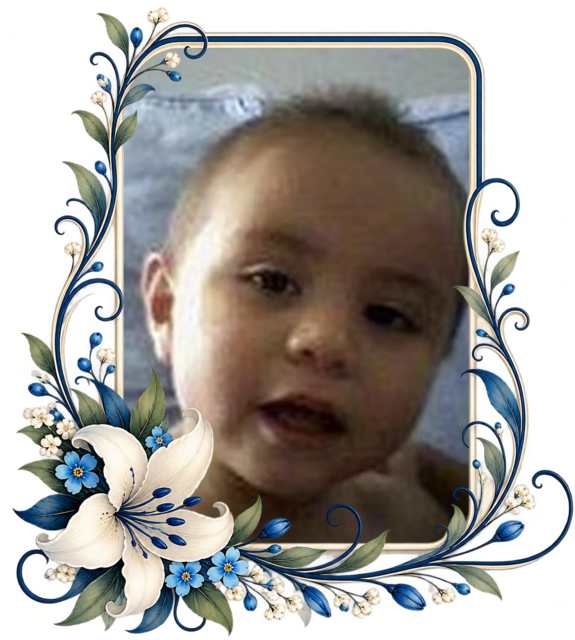
REMEMBERING CALEB
Caleb Jordan Pacheco was born on July 15, 2008, in Sterling, Colorado, to Alfred Pacheco and Juanita Kinzie. He was a little boy with a gentle smile who brought love and happiness to his family.
His family remembered that although Caleb spoke few words, he had a way of making his feelings understood. His smile could brighten the lives of those around him.
Caleb was only two years old when his life was taken in January 2011.
For nearly a year afterward, relatives searched for him, questioned his whereabouts, and pleaded for answers.
On January 22, 2012, Caleb's remains were discovered beneath a mobile home in Sterling. His mother, Juanita Kinzie, was arrested and subsequently convicted in connection with his death.
The discovery devastated a family that had spent months trying to find him.
Caleb's case also exposed serious problems within Colorado's child protection system. Relatives had repeatedly expressed concerns about his safety, yet he was returned to his mother's care shortly before he disappeared.
An independent investigation later identified extensive errors, omissions, and policy violations in the state's review of his death.
Caleb was a little boy who deserved protection, stability, and the opportunity to grow up surrounded by the people who loved him.
Instead, his life ended at just two years old.
Caleb's Story
Caleb lived in Sterling, Colorado, where his family had struggled with concerns involving his mother's substance abuse and ability to provide safe care.
During portions of 2010, Caleb was cared for by relatives, including his maternal aunt, Yolanda Kinzie-Graber.
Family members described their concerns about Juanita's drug use and questioned whether Caleb would be safe if returned to her.
Yolanda had cared for Caleb and developed a close bond with him.
According to contemporary reporting, Juanita demanded that Caleb be returned to her in January 2011.
His aunt opposed the arrangement because she feared for his safety.
Despite those concerns, Caleb was returned to his mother's care.
His relatives last saw him around January 15, 2011.
After that, Caleb disappeared from their lives.
For months, family members struggled to obtain reliable information about where he was living and whether he was safe.
Relatives contacted social services and continued asking questions about his whereabouts.
Their concerns grew as time passed without anyone seeing the little boy.
Eventually, family members created a Facebook page called Where's Caleb to draw attention to his disappearance.
They shared his photograph and pleaded for information.
But Caleb had already died.
According to statements documented during the criminal investigation, Juanita had told a former boyfriend, Joshua Briggs, that Caleb was dead.
Investigators later reported that Juanita admitted she had strangled her son and concealed his body.
Rather than reporting his death, she hid his remains beneath a mobile home where she had previously lived.
Caleb's body remained undiscovered for months.
During the summer of 2011, people living near the mobile home reported a foul odor.
The source was not identified at the time.
In January 2012, Juanita came into contact with law enforcement during an unrelated disturbance.
Authorities received information indicating that Caleb was dead and that his remains had been concealed beneath the mobile home.
Investigators searched the property.
On January 22, 2012, they discovered Caleb's remains wrapped in blankets and plastic beneath the residence.
The discovery finally answered the question his family had been asking for nearly a year.
Caleb was not missing because he had been taken somewhere else.
He had died, and his body had been hidden.
Due to the advanced decomposition of his remains, the initial autopsy could not establish a definitive medical cause of death.
However, Juanita's admissions and the circumstances uncovered during the investigation formed the basis of the criminal prosecution.
Caleb had been only two years old when he disappeared.
His third birthday passed while his family searched for him.
By the time his remains were found, nearly a year had passed since anyone outside his mother's care had seen him alive.
His family was left to confront both the loss of Caleb and the painful reality that their repeated concerns had not resulted in his protection.
Warning Signs and System Failures
Caleb's death became the subject of one of Colorado's most significant child welfare oversight investigations.
Before his disappearance, Logan County child protection workers had received repeated reports expressing concern about his safety.
Family members warned authorities about Juanita's substance abuse and questioned her ability to provide appropriate care.
Caleb had been living with relatives who wanted to protect him.
However, he was returned to his mother's care in January 2011.
That same month, he disappeared.
Following the discovery of his remains in January 2012, Colorado's Department of Human Services began reviewing the child welfare agency's involvement with Caleb and his family.
On January 5, 2013, the state's Child Fatality Review Team released a report examining the circumstances surrounding his death.
The report was intended to identify problems in the child protection response and determine whether agency policies had been followed.
However, the Colorado Office of the Child Protection Ombudsman conducted a separate investigation and identified extensive problems with the state's review.
In April 2013, the Ombudsman released findings documenting numerous inaccuracies, omissions, and failures to identify policy violations.
The investigation found that important information about Juanita's continued drug use had not been adequately included in the original report.
The review also identified problems involving the completion and documentation of risk and safety assessments.
According to the Ombudsman's findings, child protection workers had received at least three reports expressing concern about Caleb before he disappeared.
The investigation determined that the state's report failed to accurately present several important details concerning those contacts.
The Ombudsman also found that the original review omitted information about a drug test indicating Juanita had continued using methamphetamine.
By the time those results were available, Caleb and his mother had disappeared.
The independent review identified 17 additional policy violations, three violations of state law, 61 factual inaccuracies, and 16 important omissions.
The Colorado Department of Human Services disputed many of the Ombudsman's conclusions.
Nevertheless, the findings raised serious questions about the accuracy of the state's fatality review process and the adequacy of the child welfare response.
Caleb's case demonstrated how critical it is for agencies to thoroughly investigate concerns raised by relatives and accurately document risks involving vulnerable children.
His family had warned that he might not be safe.
His mother had a documented history of substance abuse.
Child protection authorities had been involved with the family.
Yet Caleb was returned to his mother's care and disappeared shortly afterward.
The failures identified in the subsequent reviews did not replace Juanita's responsibility for her son's death.
But they raised important questions about whether the systems intended to protect Caleb had adequately recognized and responded to the risks he faced.
He could not contact authorities.
He could not explain where he was living or ask someone to investigate his disappearance.
He depended entirely on adults to recognize the danger and protect him.
His family tried to raise the alarm.
By the time the truth was discovered, Caleb was gone.
JUSTICE FOR CALEB
On January 22, 2012, investigators discovered Caleb's remains beneath a mobile home in Sterling, Colorado.
His mother, Juanita Kinzie, was arrested in connection with his death.
Investigators reported that Juanita had admitted strangling Caleb and hiding his body.
She was initially charged with first degree murder.
The case proceeded through the Logan County criminal justice system.
On April 18, 2012, Juanita entered a guilty plea to second degree murder and child abuse resulting in death.
The plea agreement established a prison sentence of 32 years.
On June 5, 2012, Juanita appeared in court for sentencing.
The judge imposed the agreed 32 year prison term.
During the hearing, the judge expressed dissatisfaction with the length of the sentence, indicating that he believed the circumstances warranted a more severe punishment.
However, the court was bound by the terms of the accepted plea agreement.
The sentence provided for parole eligibility under the applicable rules, but eligibility did not guarantee release.
Juanita's conviction established her criminal responsibility for Caleb's death.
The proceedings also brought renewed attention to the warnings his family had made before his disappearance.
Relatives had feared for his safety and had continued searching for him long after he was last seen.
The criminal case ended with a prison sentence, but it could not return Caleb to the people who loved him.
Juanita Kinzie
Relationship to Caleb: Mother
Convictions: Second degree murder and child abuse resulting in death
Sentence: 32 years in prison
FOREVER REMEMBERED
Caleb Jordan Pacheco was a little boy whose life was far too short.
Born on July 15, 2008, Caleb had a gentle smile that his family remembered with love.
His obituary described a child who spoke few words but could still communicate his thoughts and feelings to those around him.
His presence brought happiness to the people who knew him.
Caleb was a son, a brother, a grandson, a nephew, and a beloved member of his family.
He had brothers named Gabriel and Isaiah and sisters named Alana, Aniyah, Isabella, and Miracle.
His family should have had years to watch him grow.
There should have been birthdays, holidays, school photographs, family gatherings, and countless ordinary moments together.
Caleb should have celebrated his third birthday.
He should have had the chance to learn new words, discover favorite activities, make friends, and grow into the person he was meant to become.
Instead, his life ended before he reached that milestone.
For nearly a year, his relatives searched for him.
They asked questions, contacted authorities, and shared his photograph because they wanted to know where he was.
Their efforts reflected how deeply Caleb mattered to them.
They did not forget him.
Even when they could not find him, they continued looking.
After his remains were discovered, the family finally had the opportunity to lay him to rest.
A funeral service was held on August 8, 2012, at Emanuel Baptist Church in Sterling.
Caleb was buried at Riverside Cemetery.
His family also requested memorial donations toward a park bench in his memory.
It was a way to create a lasting place where his life could be remembered.
Caleb's death became closely associated with the failures uncovered in Colorado's child welfare system.
But he was more than a name in an investigation or a child fatality report.
He was a little boy with a beautiful smile.
He was loved by relatives who fought to find him.
He deserved to grow up in a safe home.
He deserved to be protected when concerns were raised about his well-being.
He deserved a childhood filled with love, laughter, and opportunity.
His life ended far too soon, but his memory continues through the people who loved him and refused to let his disappearance go unanswered.
Caleb Jordan Pacheco mattered.
His life mattered.
And he deserves to be remembered for the little boy he was, not only for the tragedy that ended his life.
Abuse Angels remembers Caleb Jordan Pacheco.
Remembered. Honored. Never Forgotten.
