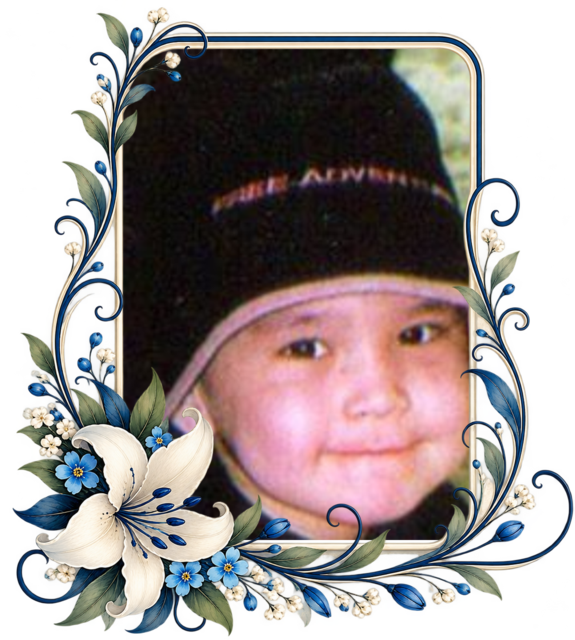
REMEMBERING PHOENIX
Phoenix Victoria Hope Sinclair was born on April 23, 2000, at the Health Sciences Centre Women's Hospital in Winnipeg, Manitoba, Canada.
Her father, Nelson Steven Sinclair, chose her name. He later recalled falling in love with his daughter after she was born, despite the uncertainty he and her mother had initially felt about becoming parents.
Phoenix was a little girl whose life was shaped by repeated changes in caregivers, homes, and family circumstances.
During her early childhood, she spent time in foster care, with her father, and with family friends who helped care for her.
She deserved the stability of a loving home, the comfort of familiar people, and the reassurance that the adults responsible for her would always keep her safe.
At five years old, Phoenix should have been preparing for school, making friends, playing, and discovering the world around her.
Instead, her childhood became marked by isolation, cruelty, and violence.
Phoenix was an Indigenous child whose death would eventually expose profound failures within Manitoba's child welfare system.
But she was more than the subject of an investigation or public inquiry.
She was a daughter, a little girl with her own life and future, and a child who deserved to grow up surrounded by safety, dignity, and love.
Phoenix's Story
Phoenix Victoria Hope Sinclair was born in Winnipeg on April 23, 2000, to Samantha Dawn Kematch and Nelson Steven Sinclair.
Both parents had experienced involvement with the child welfare system during their own childhoods.
Shortly after Phoenix was born, concerns about her parents' ability to provide appropriate care led Winnipeg Child and Family Services to place her in foster care.
In September 2000, Phoenix was returned to her parents under a plan requiring additional supervision and support.
However, the plan was not consistently followed, and social workers went extended periods without direct contact with the family.
Over the next several years, Phoenix experienced repeated changes in her living arrangements.
She lived with her father, spent time with family friends, and eventually returned to her mother's care.
In June 2003, child welfare authorities removed Phoenix from her father's home following concerns involving alcohol use and unsafe conditions.
She was later placed with family friends who cared for her.
In April 2004, Samantha Kematch took Phoenix from that home.
Although social workers had previously instructed the caregivers not to release Phoenix to either parent without notifying authorities, the arrangement was not adequately monitored.
Phoenix subsequently began living with Kematch and her boyfriend, Karl Wesley McKay.
McKay had a documented history of domestic violence, but child welfare workers failed to fully identify and assess the risks associated with his presence in the household.
In March 2005, people who knew the family became concerned about Phoenix's treatment.
They reported that she was being neglected, confined to her bedroom, and displaying troubling behavioral changes.
A report was made to child welfare authorities.
On March 9, 2005, social workers visited the family's apartment.
Kematch met them at the door and did not allow them inside.
Although workers saw another child in the home, they did not see Phoenix.
The investigation was closed without confirming her safety.
In April 2005, Kematch and McKay moved with the children to a home on the Fisher River First Nation, north of Winnipeg.
There, Phoenix endured severe and repeated abuse.
Evidence presented during the criminal proceedings established that she was frequently confined to a cold basement, where she was forced to sleep on the concrete floor.
She was beaten, kicked, and subjected to repeated acts of humiliation.
Witness testimony described Phoenix being forced to eat her own vomit.
She was also shot with a pellet gun.
The abuse was prolonged and severe.
Phoenix was treated differently from other children in the household, who did not experience the same systematic violence.
During her final weeks, Phoenix was increasingly isolated and subjected to repeated physical assaults.
On June 11, 2005, she suffered a final violent beating in the basement of the home.
The injuries inflicted upon her were fatal.
Phoenix died at just five years old.
Rather than reporting her death, Kematch and McKay concealed what had happened.
They buried Phoenix's body near a landfill on the Fisher River First Nation.
For approximately nine months, they continued pretending she was alive.
Kematch continued listing Phoenix as a dependent when dealing with government assistance programs.
During that time, child welfare authorities did not recognize that Phoenix was missing.
In March 2006, McKay's former partner contacted police after learning that her children had reported Phoenix's death.
Investigators began searching for the missing little girl.
When authorities questioned Kematch, she attempted to present another child as Phoenix.
The deception was discovered.
Kematch and McKay were arrested.
McKay eventually led investigators to the location where Phoenix had been buried.
Her remains were recovered in March 2006.
Forensic examination revealed evidence of severe injuries consistent with repeated physical violence.
The extent of the trauma was devastating.
Phoenix had endured months of abuse while the adults responsible for her care failed to protect her.
Her death remained hidden for nine months, despite her extensive history of involvement with child welfare services.
Warning Signs and System Failures
Phoenix's death became one of Canada's most widely examined child welfare tragedies.
Her case revealed repeated missed opportunities to recognize danger and protect a vulnerable child.
Child welfare authorities had been involved in Phoenix's life from the time she was born.
Over the following five years, workers received numerous reports and warnings involving her living conditions, caregivers, and safety.
Despite those concerns, Phoenix's file was repeatedly opened and closed without adequate follow up.
In 2003, Phoenix was taken to a hospital after an object had remained lodged in her nose for an extended period, causing an infection.
A later internal review identified the lack of timely medical attention as evidence of neglect and questioned why a more thorough investigation had not occurred.
In 2004, Phoenix was returned to her mother's care without adequate oversight.
Social workers did not fully investigate Karl McKay's background, despite records documenting his history of violence.
An intake worker who reviewed Phoenix's circumstances expressed concern that she faced a serious risk of neglect and recommended an urgent response.
That recommendation was changed during the supervisory review process.
The response was delayed.
In March 2005, another warning reached child welfare authorities.
People familiar with Phoenix's home reported disturbing behavior and signs that she was being mistreated.
When workers visited, they did not see Phoenix.
Nevertheless, the file was closed.
Just three months later, she was dead.
Even after her death, the system failed to recognize that she was missing.
Her disappearance remained undiscovered for approximately nine months.
In 2011, the Manitoba government appointed retired judge Ted Hughes to lead a public inquiry into the circumstances surrounding Phoenix's death.
The inquiry examined the services provided to Phoenix and her family, the decisions made by child welfare agencies, and the reasons her death went undetected.
The final report, released on January 31, 2014, documented serious failures in communication, risk assessment, supervision, and accountability.
The inquiry concluded that the child welfare system had failed to fulfill its responsibility to protect Phoenix.
Commissioner Hughes issued 62 recommendations intended to strengthen child protection practices and prevent similar tragedies.
The report also addressed broader issues affecting Indigenous children and families, including their disproportionate involvement in Canada's child welfare system.
Phoenix's death demonstrated the devastating consequences of failing to act on repeated warnings.
She was known to child welfare authorities throughout much of her life.
Yet when she needed protection most, she was left in a home where she experienced escalating violence.
Her story remains a reminder that opening a file, conducting a brief visit, or recording a concern is not the same as ensuring a child is safe.
JUSTICE FOR PHOENIX
Following the discovery of Phoenix's remains in March 2006, Samantha Dawn Kematch and Karl Wesley McKay were charged with first degree murder.
During the criminal proceedings, prosecutors presented evidence of the prolonged abuse Phoenix had suffered while living with the couple.
Witnesses described repeated beatings, confinement in the basement, humiliation, and severe physical mistreatment.
The court heard that Phoenix had been subjected to violence over an extended period before the final assault that caused her death.
Evidence also established that Kematch and McKay concealed her death and buried her body near a landfill.
On December 12, 2008, both defendants were convicted of first degree murder.
They were each sentenced to life imprisonment without eligibility for parole for 25 years.
Both challenged their convictions.
In March 2010, the Manitoba Court of Appeal upheld the first degree murder convictions.
The appellate proceedings considered arguments concerning the evidence of forcible confinement and the legal basis for the first degree murder verdicts.
The convictions remained in place.
Although Kematch and McKay were held criminally responsible for Phoenix's death, the case also prompted a broader examination of the child welfare decisions that had left her vulnerable.
The public inquiry that followed did not replace the criminal proceedings. Its purpose was to examine the failures that allowed Phoenix to remain in danger and to recommend improvements to the child protection system.
No conviction, sentence, or public inquiry could restore Phoenix's life or give her the childhood she deserved.
Samantha Dawn Kematch
Relationship to Phoenix: Mother
Conviction: First degree murder
Sentence: Life imprisonment without parole eligibility for 25 years
Karl Wesley McKay
Relationship to Phoenix: Mother's common law partner
Conviction: First degree murder
Sentence: Life imprisonment without parole eligibility for 25 years
FOREVER REMEMBERED
Phoenix Victoria Hope Sinclair should have grown up surrounded by love, safety, and the freedom to experience childhood.
She should have attended school, made friends, celebrated birthdays, and discovered the interests and dreams that would have made her future uniquely her own.
At five years old, Phoenix was still a little girl who depended on adults for protection.
She should never have experienced the isolation, fear, and violence that marked the final months of her life.
She deserved to be comforted when she was frightened, cared for when she was hurt, and protected whenever she was in danger.
Instead, her life ended in a home where she had been subjected to prolonged cruelty.
For nine months after her death, the world did not know that Phoenix was gone.
But once the truth emerged, her story could no longer be ignored.
Her name became associated with a public inquiry, demands for accountability, and efforts to strengthen child protection.
Yet Phoenix deserves to be remembered for more than the failures that surrounded her death.
She was a daughter.
She was a little girl whose life had meaning long before her story became known across Canada.
Her life was precious, and her future should never have been taken away.
Phoenix's story reminds us that children cannot be protected through promises alone. Their safety requires adults and institutions to recognize danger, listen to concerns, and act.
Although Phoenix did not receive the protection she deserved, her memory continues to call attention to the responsibility society carries toward vulnerable children.
She was only five years old.
She deserved a lifetime.
Abuse Angels remembers Phoenix Victoria Hope Sinclair.
Remembered. Honored. Never Forgotten.
