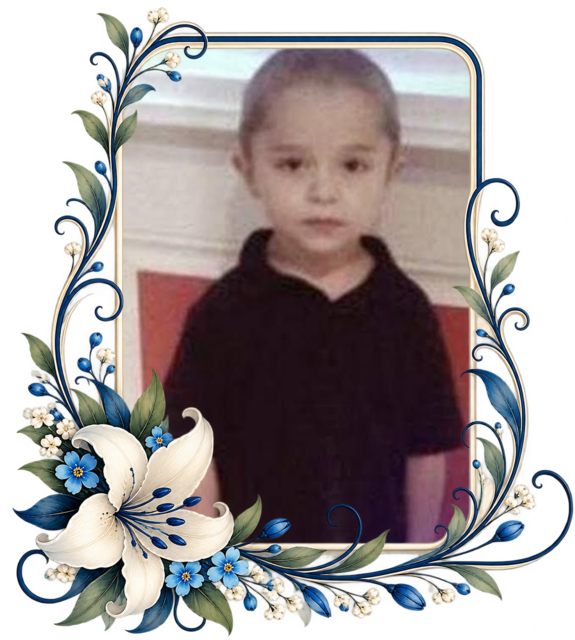
REMEMBERING GABRIEL
Gabriel Andres Trujillo, affectionately known as Gabe, was only four years old when his life ended on February 17, 2012, in Commerce City, Colorado.
Gabriel had two older sisters, Krista and Monique. The three children had been placed in their grandmother's care by the Adams County Department of Social Services in March 2011.
Gabriel should have been growing up alongside his sisters, attending school, making friends, and experiencing the ordinary joys of childhood.
Instead, much of his final year was marked by concerns about his physical condition and safety.
Family members became alarmed by photographs showing bruises on Gabriel's body. Other reports raised concerns about possible abuse and neglect.
By February 2012, Gabriel was severely underweight and had numerous injuries in different stages of healing.
On Valentine's Day, he was found unconscious inside his grandmother's home.
He died three days later from blunt force injuries to his head and neck.
Gabriel's death led to criminal proceedings against two adults and renewed scrutiny of the child protection system responsible for monitoring his safety.
But Gabriel was more than the circumstances surrounding his death.
He was a little boy, a brother, a grandson, and a child whose life deserved protection.
Gabriel's Story
In March 2011, Gabriel and his two older sisters were placed in the care of their grandmother, Doris “Becky” Trujillo, in Commerce City, Colorado.
The children remained in her custody during the months leading up to Gabriel's death.
Concerns about Gabriel's well-being began emerging before February 2012.
Relatives reported seeing photographs showing large bruises on his body.
By January 2012, Gabriel appeared malnourished and had multiple visible injuries.
Medical professionals examined some of his injuries, including bruises, scrapes, and a fracture, but were unable to conclusively determine whether they had resulted from accidents or abuse.
On February 7, 2012, Commerce City police visited the home.
Gabriel's paternal grandmother, Elizabeth Trujillo, contacted police the following day and was reportedly told that officers did not intend to return because the situation appeared satisfactory.
On February 14, 2012, police and emergency responders were called to the home on Siegal Court.
Gabriel was unconscious and unresponsive.
Officers found him naked, with bruises and scars across his body.
Investigators described injuries in different stages of healing and said Gabriel appeared malnourished.
His body temperature was dangerously low.
Prosecutors alleged that Doris Trujillo had forced Gabriel to stand naked in the cold as punishment.
Doris told investigators that Gabriel had fallen from a chair and struck his head.
However, investigators reported that his injuries were not consistent with the explanation she provided.
Gabriel was transported to Children's Hospital Colorado in Aurora.
Medical professionals identified catastrophic injuries to his head, including evidence of earlier bleeding.
He remained hospitalized on life support.
On February 17, 2012, Gabriel died from blunt force injuries to his head and neck.
He was four years old.
During the investigation, prosecutors presented evidence of extensive bruising and other injuries Gabriel had suffered while living in his grandmother's home.
Photographs recovered from Doris Trujillo's cellphone showed injuries that prosecutors argued were evidence of repeated mistreatment.
The prosecution alleged that Gabriel had been physically abused and deprived of adequate food.
At trial, the defense disputed those allegations and argued that Gabriel had suffered an earlier closed-head injury that contributed to falls and changes in his behavior.
The jury ultimately acquitted Doris Trujillo of first-degree murder but convicted her of criminally negligent child abuse resulting in serious bodily injury.
The verdict established criminal responsibility for child abuse while not finding her guilty of murder.
Gabriel's death remained a homicide caused by blunt force injuries.
He was only four years old and entirely dependent on adults to recognize his injuries, provide care, and protect him from harm.
Warning Signs and System Failures
Gabriel's death followed months of reported concerns about his safety.
The Adams County Department of Social Services had placed Gabriel and his sisters in Doris Trujillo's care in March 2011.
In September 2011, concerned neighbors reportedly requested a welfare check.
Family members also became increasingly worried about Gabriel's physical condition.
His paternal grandmother, Elizabeth Trujillo, reported concerns after seeing photographs showing significant bruising.
By January 2012, Gabriel appeared malnourished and had multiple injuries.
Medical professionals evaluated bruises, scrapes, and a fracture but could not conclusively determine whether they were accidental or inflicted.
The inability to establish the cause of those injuries meant that concerns about possible abuse remained unresolved.
On February 7, 2012, Commerce City police visited Gabriel's home.
Elizabeth contacted officers the following day and was reportedly told that they would not return because the situation appeared satisfactory.
Six days later, Gabriel was found unconscious.
The injuries observed when police responded on February 14 included extensive bruising and scars in different stages of healing.
At trial, prosecutors presented photographs documenting injuries over several months.
They argued that Gabriel had been subjected to repeated physical mistreatment and inadequate nourishment.
The case raised serious questions about whether earlier reports, medical findings, and family concerns had been adequately evaluated together.
Gabriel's death became part of a broader public examination of Colorado's child welfare system.
Reporting about child fatalities in the state identified his case among those in which relatives had raised concerns before a child died.
The documented warnings do not establish that every individual involved knew the full extent of Gabriel's injuries or could predict his death.
They do establish that concerns about his physical condition had been raised repeatedly before the fatal emergency.
Gabriel was four years old.
He could not independently seek protection, challenge the explanations adults provided for his injuries, or ensure that reports about his welfare received further investigation.
His safety depended on adults recognizing the seriousness of those concerns and responding appropriately.
The warnings surrounding his condition deserve to remain part of his story.
JUSTICE FOR GABRIEL
Following the discovery of Gabriel unconscious on February 14, 2012, Commerce City police investigated the circumstances surrounding his injuries.
Doris “Becky” Trujillo was arrested after investigators determined that Gabriel's injuries were inconsistent with her account of an accidental fall.
Gabriel died on February 17, 2012.
The Adams County Coroner determined that his death resulted from blunt force injuries to the head and neck.
Prosecutors subsequently charged Doris with first-degree murder and child abuse resulting in death.
A second adult living in the home, Lana Roberts, was also charged with child abuse resulting in death in March 2012.
Doris Trujillo's trial began in May 2013 in Adams County District Court.
Prosecutors argued that Gabriel had experienced repeated abuse while in his grandmother's care.
The defense disputed that she had caused the fatal injuries and presented an alternative explanation involving earlier head trauma and accidental falls.
On June 7, 2013, the jury returned a split verdict.
Doris was found not guilty of first-degree murder.
However, she was convicted of criminally negligent child abuse resulting in serious bodily injury.
The jury's decision distinguished the child abuse conviction from the prosecution's allegation that Doris had murdered Gabriel.
In August 2013, Doris was sentenced to eight years in prison.
The judge imposed the maximum sentence reported for her conviction, emphasizing the injuries Gabriel had suffered while in her care.
The criminal charge against Lana Roberts was dismissed in June 2013.
Her dismissal did not change the outcome of Doris Trujillo's separate prosecution.
Although Gabriel's death was ruled a homicide, no first-degree murder conviction resulted from Doris Trujillo's trial.
Doris “Becky” Trujillo
Relationship to Gabriel: Grandmother and legal guardian
Conviction: Criminally negligent child abuse resulting in serious bodily injury; acquitted of first degree murder
Sentence: 8 years in prison
Lana Roberts
Relationship to Gabriel: Adult living in his grandmother's home
Charge: Child abuse resulting in death
Conviction: None; charges dismissed in June 2013
Sentence: None
FOREVER REMEMBERED
Gabriel Andres Trujillo was only four years old when his life ended.
His family called him Gabe.
He was a little boy who should have been spending his childhood playing, learning, and growing up alongside his older sisters, Krista and Monique.
He should have celebrated his fifth birthday.
He should have had school pictures, childhood friendships, family celebrations, and years of memories still ahead of him.
Instead, Gabriel's life ended after months of concerns about his physical condition and safety.
The photographs, medical findings, and court testimony became part of the public record.
But Gabriel was more than the injuries documented in those records.
He was a child who deserved to feel safe.
He deserved nourishment, medical attention, comfort, and protection.
He deserved adults who recognized when he was suffering and took the steps necessary to help him.
The criminal proceedings established responsibility for child abuse, but they could not return Gabriel to his family.
His sisters lost their little brother.
His relatives lost a child whose life had barely begun.
Gabriel's story also remains a reminder of the importance of taking concerns about child abuse seriously, particularly when multiple people have noticed injuries or changes in a child's condition.
He should not have needed to endure further suffering before those concerns were fully understood.
Gabriel deserved the chance to grow into the person he might have become.
His life mattered beyond the investigation, beyond the trial, and beyond the failures that surrounded his final months.
He deserves to be remembered as Gabe, a four-year-old boy whose childhood should have continued.
Abuse Angels remembers Gabriel Andres Trujillo.
Remembered. Honored. Never Forgotten.
