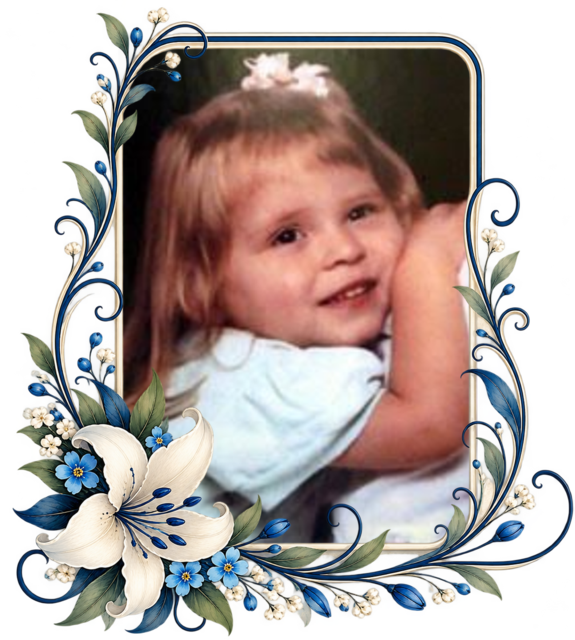
REMEMBERING KRISTEN
Kristen Tatar was only four years old when her life was taken in July 2003 in Pennsylvania.
Kristen was a little girl with blonde, curly hair, blue eyes, and a playful personality that her older sister would remember for decades.
She was born with a medical condition affecting her esophagus that made eating difficult. Although the condition was surgically treated, Kristen needed careful feeding and proper nutrition to grow and remain healthy.
For part of her short life, Kristen received that care.
While living with a foster mother, Lori Weimer, Kristen gained weight and began thriving. Photographs from that period showed a healthier, happier little girl.
But after Kristen was returned to her biological parents, Janet Crawford and James Tatar, her life changed dramatically.
She was increasingly isolated from relatives and others who might have recognized her suffering.
Food was withheld from her as punishment.
She became severely malnourished, weak, and unable to care for herself.
Eventually, Kristen was confined to the attic of her family's home, where she died from starvation and dehydration.
She was four years old.
Years later, her older sister Jaycee would remember the little girl behind the tragedy: her curly hair, her giggles, and the happiness she brought into the world.
Kristen deserved to be remembered as that little girl, not only as the victim of a terrible crime.
Kristen's Story
Kristen was born in January 1999 with a congenital abnormality affecting her esophagus.
The condition was treated surgically, but she continued to need extra attention during meals because eating could be difficult.
When Kristen was an infant, doctors became concerned about her failure to thrive.
Her medical problems and inadequate nutrition brought her to the attention of the Westmoreland County Children's Bureau.
In December 1999, Kristen was placed in foster care.
She spent time in several foster homes before being placed with Lori Weimer, who cared for children with special needs.
Under Lori's care, Kristen began gaining weight.
She received the attention and assistance she needed to eat properly, and her health improved.
By August 2001, Kristen weighed approximately 24 pounds.
Lori hoped to adopt her, but child welfare authorities were working toward returning Kristen to her biological parents.
In September 2001, Kristen was returned to Janet Crawford and James Tatar.
Her foster mother had expressed concerns that Kristen would not receive the specialized care she required.
Those concerns would prove devastatingly significant.
After returning home, Kristen's condition deteriorated.
According to testimony presented during the criminal proceedings, James Tatar used food as a means of punishment and control.
He reportedly withheld meals when Kristen struggled with toilet training or experienced difficulty eating.
Her mother later testified that James would taunt Kristen by showing her crackers while refusing to let her eat.
Kristen was eventually excluded from family meals.
When she struggled with food because of her medical history, she was punished rather than helped.
By the spring of 2003, Kristen had become extremely thin, weak, and lethargic.
Her suffering was visible.
Yet she was not provided the medical treatment and nutrition she desperately needed.
The abuse also involved isolation.
According to testimony, James Tatar placed Kristen in the attic when her older sister visited because he feared the teenager would notice Kristen's bruises or severe weight loss and tell someone.
During one period of confinement, Janet Crawford testified that she secretly brought Kristen food.
During a later period, she did not.
In early July 2003, Kristen was confined to the attic again.
A subsequent federal court opinion described how Kristen was left there for days without food or water, with a pacifier secured over her mouth to prevent her from crying.
Kristen died sometime during the first week of July 2003.
Her parents did not immediately report her death.
Instead, Kristen's body was concealed.
For approximately a month, relatives and authorities were given misleading explanations about her whereabouts.
By August 2003, child welfare workers had been attempting to locate Kristen.
After they were unable to obtain satisfactory answers about where she was, police became involved.
On August 7, 2003, authorities discovered Kristen's body in a picnic cooler behind the family's home.
The cooler had been wrapped in garbage bags and placed inside a trash container.
Kristen's body weighed approximately 11½ pounds.
She weighed less than half of what she had weighed during her earlier medical care.
The investigation determined that Kristen had died from severe malnutrition and dehydration.
She had not died because her medical condition made survival impossible.
Medical testimony established that Kristen could have lived and developed with appropriate nutrition and care.
Instead, the adults responsible for her deliberately deprived her of the basic necessities of life.
Warning Signs and System Failures
Kristen's death followed years of documented concerns about her health, safety, and treatment.
She had been known to child protective services since infancy.
Her failure to thrive had resulted in her removal from her parents' care in December 1999.
While living in foster care, Kristen received appropriate nutrition and gained weight.
Her improvement demonstrated that her medical needs could be managed when she received consistent care.
Lori Weimer, Kristen's foster mother, expressed serious concerns about returning her to her biological parents.
She believed Kristen required more attention than they would provide.
Despite those concerns, Kristen was returned to Janet Crawford and James Tatar in September 2001.
Because the family had moved, responsibility for Kristen's case was transferred from Westmoreland County to Armstrong County.
That transfer later became a significant issue in litigation concerning the handling of her case.
Kristen's mother also had a history of custody disputes involving her older children.
Court records and allegations concerning those children included concerns about neglect, inadequate supervision, and failure to obtain appropriate medical care.
Those circumstances added to the broader history of concerns surrounding the household.
After Kristen returned home, she became increasingly isolated.
Relatives went months without seeing her.
Neighbors later reported that they had not even realized a little girl lived in the home.
Meanwhile, Kristen's weight continued to decline.
By the time she died, she weighed approximately 11½ pounds.
Her medical needs had been known.
Her earlier malnutrition had been documented.
Her foster mother had warned that returning her to her parents could place her at risk.
Yet Kristen remained in the home where she was ultimately starved to death.
Following her death, Kristen's aunt, Cathy Fondrk, acting on behalf of her estate, filed a federal civil rights lawsuit against child welfare agencies and other service providers.
The lawsuit alleged that failures in the handling of Kristen's case contributed to her death.
Among the concerns raised were the transfer of records between counties, changes to child welfare documentation, and the destruction of service provider notes.
Reporting on the litigation described evidence that some risk assessment records had been altered and that handwritten service records had been destroyed.
In December 2007, a federal judge dismissed the civil rights claims against the agencies and service providers.
The court determined that the evidence did not establish the legal requirements necessary to hold those defendants responsible for the criminal acts committed by Kristen's parents.
The dismissal did not erase the documented history of concerns surrounding Kristen's safety.
Her case also prompted examination of child welfare practices in Westmoreland County.
A subsequent review recommended additional oversight of county human services, improved supervision, and measures to address caseworker turnover.
Kristen's death demonstrated the danger of losing sight of a vulnerable child whose medical and nutritional needs require consistent attention.
She had once been safe enough to gain weight and begin thriving.
She had people who recognized her needs and wanted to protect her.
But those protections did not continue.
Kristen was returned to an environment where she was denied food, isolated, and ultimately left to die.
JUSTICE FOR KRISTEN
Following the discovery of Kristen's body in August 2003, Pennsylvania State Police arrested Janet Crawford and James Tatar.
Both were charged in connection with their daughter's death.
Investigators determined that Kristen had suffered prolonged starvation and dehydration.
Medical testimony established that her congenital medical condition did not explain the extreme malnutrition that caused her death.
The prosecution maintained that her parents had deliberately withheld food and failed to provide necessary care.
Janet Crawford pleaded guilty to a general charge of criminal homicide.
A subsequent hearing was held to determine the degree of murder.
Crawford agreed to testify against James Tatar as part of an agreement under which prosecutors would not seek the death penalty against her.
During the proceedings, she described how Kristen had been denied food, punished for difficulty eating and toilet training, and hidden from relatives who might have recognized her condition.
In October 2004, Crawford was found guilty of first degree murder.
She received a mandatory sentence of life imprisonment without the possibility of parole.
James Tatar proceeded to trial in November 2004.
Prosecutors presented medical evidence, photographs, and testimony describing Kristen's deterioration after she returned home from foster care.
They argued that Tatar had deliberately withheld food and confined Kristen as punishment.
The defense challenged Crawford's credibility and disputed the prosecution's account.
The jury found James Tatar guilty of first degree murder.
He was sentenced to life imprisonment without the possibility of parole.
Tatar subsequently challenged his conviction, raising issues involving child welfare records and the effectiveness of his legal representation.
The available reporting documents those challenges but does not establish that his conviction was overturned.
Both parents were convicted of first degree murder for Kristen's death.
Janet Lynne Crawford
Relationship to Kristen: Mother
Conviction: First degree murder
Sentence: Life imprisonment without the possibility of parole
James Anthony Tatar
Relationship to Kristen: Father
Conviction: First degree murder
Sentence: Life imprisonment without the possibility of parole
FOREVER REMEMBERED
Kristen Tatar was only four years old when her life ended.
For much of her short life, Kristen was known through medical records, child welfare reports, court proceedings, and the terrible circumstances of her death.
But those records do not tell the whole story of who she was.
Her older sister, Jaycee, remembered a little girl with blonde, curly hair, blue eyes, giggles, and a playful spirit.
Those memories mattered.
They were reminders of the child Kristen had been before neglect and cruelty overwhelmed her life.
Years after Kristen's death, a memorial bench became a special place for Jaycee to remember her little sister.
She visited the bench on meaningful dates, including birthdays, finding comfort in having a place where she could feel close to Kristen.
In 2023, Jaycee spoke publicly about her desire to bring the bench home so that she could remember her sister privately with her own family.
Even after two decades, Kristen remained an important part of her sister's life.
Jaycee had grown older, become a mother, and built a family of her own.
But someone was still missing.
Kristen should have been there.
She should have grown into a teenager and eventually an adult.
She should have celebrated birthdays, attended school, made friends, and discovered the things that brought her happiness.
She should have been able to sit at a family table and eat without fear.
She should have been comforted when she was sick.
She should have received the extra care her medical condition required.
And she should never have been made to feel that her basic needs were something she had to earn.
Kristen was not difficult or undeserving because she needed help eating.
She was a little girl with a medical condition who deserved patience, compassion, and proper care.
Her life was not defined by the cruelty of her parents.
She was a daughter, a sister, and a child whose laughter and personality remained in the memories of those who loved her.
The years have passed, but Kristen has not been forgotten.
Her sister continues to carry her memory.
And her story remains a reminder that every child deserves to be seen, heard, nourished, and protected.
Abuse Angels remembers Kristen Tatar.
Remembered. Honored. Never Forgotten.
