Unknown - September 2002
Age: 7 Years
Location: Irvington and Newark, New Jersey
Suspect in death: Wesley Murphy, Caregiver’s Son; Sherry Murphy, Caregiver
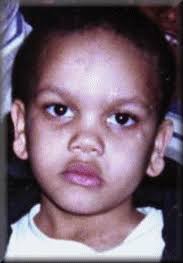
REMEMBERING FAHEEM
Faheem Williams was seven years old. He had a twin brother named Raheem and a younger brother named Tyrone. The three boys endured circumstances no child should ever experience, but Faheem was the one who did not make it out alive. Long before his death became national news, Faheem was a little boy whose name had been known to the very system created to protect children. There had been reports. There had been investigations. There had been opportunities to intervene. And there were brothers who needed someone to find them. When hundreds of people eventually gathered to say goodbye to Faheem, his small white casket was surrounded by flowers. A teddy bear rested nearby, along with photographs of the seven year old boy whose death had shaken New Jersey. Faheem should never have needed hundreds of strangers to mourn him. He needed someone to save him while he was still alive.
FAHEEM’S STORY
Faheem and his brothers had experienced instability and allegations of abuse and neglect for years. Their mother, Melinda Williams, had a lengthy history with New Jersey’s Division of Youth and Family Services. In March 2002, when Melinda went to jail, she left Faheem, his twin brother Raheem and their younger brother Tyrone in the care of her cousin, Sherry Murphy. The children knew Sherry as their aunt. What followed was horrific. The boys were deprived of adequate food. They were physically abused. They were restrained. Their living conditions deteriorated. Faheem became severely malnourished. In September 2002, Sherry’s teenage son, Wesley Murphy, was with Faheem in an Irvington apartment. Wesley later admitted that while performing a wrestling move, he forcefully drove his knee into Faheem’s abdomen. Faheem collapsed. He died. But no one called authorities to report the death of this seven year old child. Sherry later admitted finding Faheem’s body on the floor and attempting to revive him. She left his body there for days. Then she concealed him inside a plastic storage container. When Sherry moved from Irvington to Newark, Faheem’s body was moved with her. The container holding his remains was hidden in the basement. Meanwhile, Raheem and Tyrone remained alive. They were confined inside another basement room in horrific conditions. They were severely malnourished and dehydrated. They slept on a filthy mattress and had a bucket for a toilet. They were hidden away from the outside world. Then, on January 4, 2003, someone finally found them. Sherry’s boyfriend went into the basement looking for his work boots. He encountered a locked room and broke through the door. Under a bed were two starving children. Police were called. Raheem and Tyrone were taken to the hospital. But authorities did not initially know that another child was missing. At the hospital, Raheem told investigators that he had a twin brother whom he had not seen for a long time. Police returned to the house. On January 5, they found Faheem. His badly decomposed body was inside the plastic storage container. He had been dead for months. An autopsy determined that Faheem died from starvation and blunt force trauma to his abdomen. His death was ruled a homicide.
SYSTEM FAILURES & WARNING SIGNS
Faheem’s death exposed profound failures within New Jersey’s child protection system. This family was not unknown to authorities. There had been approximately a decade of child abuse and neglect complaints involving Melinda Williams and her children. Child welfare officials conducted repeated investigations. Reports included allegations that the children were being beaten and burned. Yet the children remained in dangerous circumstances. The Division of Youth and Family Services closed the family’s case approximately eleven months before Faheem’s body was discovered. The system then lost track of the children. Even after Melinda went to jail and the boys were left with Sherry Murphy, the agency responsible for protecting them did not maintain the oversight necessary to ensure that they were safe. Faheem disappeared. His brothers disappeared. No school, doctor or child welfare worker reached them before Faheem died. After his body was discovered, the failures became impossible to ignore. Officials examining the agency found other children involved in abuse cases whose whereabouts were unknown and hundreds of allegations that had not been investigated. The caseworker associated with the Williams family was reportedly carrying an extraordinary caseload far beyond recommended levels. New Jersey’s governor ordered an emergency review of the child welfare system. Faheem’s death ultimately became a catalyst for sweeping reforms intended to reduce caseloads, improve investigations, strengthen supervision and prevent children from disappearing from the system. Those reforms came too late for Faheem. The warning signs surrounding Faheem and his brothers existed for years. There were repeated allegations of abuse and neglect. There were reports that the children had been beaten. There were allegations of burns. There were periods when their mother left the children with others. There were repeated contacts with the child welfare system. And eventually, the boys disappeared from ordinary public life. Inside the home, the abuse escalated. Food became scarce. The children became emaciated. They were confined and isolated. By the time Raheem and Tyrone were discovered, their physical condition showed how long they had been suffering.
Faheem never got the chance to walk out of that basement with his brothers.
JUSTICE FOR FAHEEM
The criminal cases surrounding Faheem’s death took years to resolve. Wesley Murphy ultimately admitted causing the abdominal injury that killed Faheem. In September 2005, he pleaded guilty to reckless manslaughter. He acknowledged performing a wrestling move in which he forcefully drove his knee into Faheem’s abdomen. He was sentenced to three years in prison. Sherry Murphy admitted concealing Faheem’s body after finding him dead and acknowledged her role in the horrific treatment of the surviving children. She pleaded guilty to criminal restraint, aggravated assault and endangering the welfare of a child. An attempted murder charge was dropped as part of the plea agreement. She was sentenced to 25 years in prison. The sentences could punish criminal conduct. They could not undo what happened to Faheem or return the childhood stolen from him and his brothers.
Wesley Murphy
Relationship to Faheem: Caregiver’s son
Conviction: Reckless manslaughter
Sentence: 3 years in prison
Sherry Murphy
Relationship to Faheem: Caregiver and mother’s cousin
Convictions: Criminal restraint, aggravated assault and endangering the welfare of a child
Sentence: 25 years in prison
FOREVER REMEMBERED
Faheem Williams was seven years old. For months after his death, the world did not even know he was gone. His body was hidden. His brothers were hidden. The children who should have been seen and protected had effectively disappeared. Then Raheem survived long enough to speak his brother’s name. He told investigators that he had a twin brother. That statement led police back into the basement and ultimately to Faheem. The discovery of Faheem’s body forced an entire state to confront what had happened while children known to its protection system slipped from view. Investigations followed. Workers were suspended. Policies changed. The child welfare system was overhauled. But no reform can ever be considered payment for a child’s life. Faheem deserved protection before his name became the reason people demanded change. He deserved to grow beside his twin brother. He deserved to leave that house with Raheem and Tyrone. He deserved school days, birthdays and ordinary childhood memories. He deserved to become more than the seven year old boy whose death exposed a broken system. Faheem Williams was here. His brothers remembered him. And his name helped force people to look at children who had been allowed to disappear. Abuse Angels remembers Faheem Williams. Remembered. Honored. Never Forgotten.
