March 22, 2000 – November 3, 2007
Age: 7 years old
Location: Hawks Nest, New South Wales, Australia
Suspects in death: Sharyn Ward, mother; Blakeley Ward, father
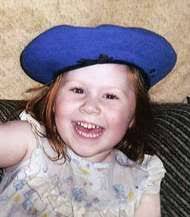
REMEMBERING SHELLAY
Shellay Ebony Ward was seven years old. She was one of four daughters born to Sharyn and Blakeley Ward. Shellay experienced developmental delays and was diagnosed with autism by a pediatrician in 2005, although a later official investigation noted that the diagnosis was never formally assessed.mThere had once been people outside Shellay's home who saw her During preschool assessments, she was observed to have limited communication, but the person assessing her also recorded something wonderfully simple about the little girl in front of them. Shellay had a lovely smile. She was also described as doing well in her preschool placement. Professionals believed she needed speech therapy, occupational therapy, physiotherapy and ongoing support to help her reach her developmental potential. Shellay deserved the opportunity to receive all of those things. Instead, she became increasingly isolated. By the beginning of 2006, there is no record of Shellay receiving services from any agency. Although her parents accepted an offer for her to attend a special school, they never enrolled her. Shellay never attended school before her death. Over time, fewer and fewer people saw her. Eventually, almost no one did. And inside her home, Shellay was slowly starving to death.
SHELLAY'S STORY
The final years of Shellay's life were marked by extreme isolation and neglect. Her family had been known to the New South Wales Department of Community Services for years. Concerns involving the children included school absenteeism, physical neglect, failure to obtain medical care and the condition of the family home. Shellay herself had previously experienced problems with failing to thrive and developmental delay. In March 2007, the Department of Housing reported the squalid condition of the family's home to child protection authorities. Caseworkers visited the home in April and saw Shellay's two older sisters. They did not see Shellay. A pediatrician saw the older girls the following month. Again, Shellay was not seen. Despite professionals being involved with the family, the official investigation later found that no professional saw Shellay during the months before her death. In August 2007, the family moved from Matraville to Hawks Nest. After they left their former home, a community member entered the property. Shellay's bedroom was filthy. Feces were reported throughout the room. Those concerns were reported to both education officials and the Department of Community Services in September. Authorities eventually obtained the family's new address. But Shellay remained unseen. By October 30, only four days before she died, the family's child protection files were transferred to the Department of Community Services office responsible for their new area. The case was not allocated to a child protection worker before Shellay died. Inside the Hawks Nest home, Shellay's condition had become catastrophic. Evidence later presented in the criminal case described her as being kept isolated in her bedroom. A tradesman who had visited the home approximately one month before her death reportedly saw the bedroom door secured with rope and was told the family's autistic daughter was inside. On November 3, 2007, Shellay was found dead on a mattress in her bedroom. She was seven years old. She weighed only about nine kilograms, approximately 20 pounds. The average weight cited at the time for a seven year old girl was approximately 23 kilograms. The condition of Shellay's body revealed the extent of what she had endured. She was profoundly emaciated and dehydrated. Her muscles had wasted so severely that rigor mortis did not develop normally. The bones of her rib cage were prominent, and there was essentially no remaining body fat beneath her skin. Her body and bedding were soiled with urine, and evidence presented in court described the filthy conditions surrounding the mattress where she died. Her parents claimed that Shellay had eaten dinner and watched television with them the night before her death. The medical evidence did not support the picture they presented of a healthy, properly nourished child. An autopsy determined that Shellay died from chronic starvation and neglect. This was not a sudden death.
Shellay had been wasting away. She had been disappearing from public view. And by the time she died, the little girl who had once been described as having a lovely smile weighed only about 20 pounds.
WARNING SIGNS & SYSTEM FAILURES
Shellay's death became one of Australia's most disturbing examples of a child dying despite years of contact between her family and government agencies. The family's history with the Department of Community Services began in 1993, years before Shellay was born. After Shellay's birth in 2000, she experienced failure to thrive. During a period of intensive child protection involvement beginning in 2001, her parents repeatedly failed to cooperate with services, missed medical appointments and sometimes prevented workers from seeing Shellay. In 2002, the family's youngest child was removed after that baby also failed to thrive while in the parents' care.
Authorities considered removing Shellay and her two older sisters as well, but the three older children ultimately remained with their parents. The warning signs continued. During 2005 alone, the Department of Community Services received six risk of harm reports concerning the children. None were allocated for a risk assessment. Shellay was offered a place at a special school. She never attended. She needed therapy and developmental services. She stopped receiving them. Reports continued to be made. In 2006, the Department of Community Services received three more risk of harm reports concerning the children. One specifically involved Shellay's failure to attend school. After inquiries confirmed that education officials remained concerned about the children, the report was closed because of competing priorities. Then came 2007. The Department of Housing reported the squalid condition of the home. Workers saw Shellay's sisters. No one saw Shellay. After the family moved, feces were discovered throughout Shellay's former bedroom and authorities were notified. Still, Shellay was not seen. A risk assessment was eventually completed on October 26, 2007. The potential consequences of harm to the children were assessed as extreme. Protective factors were not in place. The probability of harm was considered highly likely. The assessment had taken 210 days to complete. Four days later, the case was transferred to another child protection office. Four days after that, Shellay was dead. Her case had not yet been allocated to a child protection worker at the new office. The New South Wales Ombudsman later conducted an extensive investigation involving the actions of Community Services, Education and Training, Ageing, Disability and Home Care, Housing and the New South Wales Police Force. The investigation identified serious deficiencies in how agencies responded to the family and shared information. The Ombudsman concluded that Shellay's death was preventable. There had been reports. There had been warning signs. There had been professionals. There had been years of government involvement. But during the period when Shellay was becoming dangerously malnourished, the little girl at the center of all those files had effectively disappeared from sight.
JUSTICE FOR SHELLAY
Sharyn and Blakeley Ward were charged in connection with their daughter's death. Their case went before the New South Wales Supreme Court. After a five week trial, on June 23, 2009, a jury found Sharyn Ward guilty of murder and Blakeley Ward guilty of manslaughter. Sharyn Ward was sentenced to life imprisonment. Blakeley Ward was sentenced to imprisonment with a minimum term of 12 years.
Sharyn Ward
Relationship to Shellay: Mother
Conviction: Murder
Sentence: Life imprisonment
Blakeley Ward
Relationship to Shellay: Father
Conviction: Manslaughter
Sentence: Imprisonment with a minimum term of 12 years
FOREVER REMEMBERED
Shellay's death forced people to confront more than what happened inside one home. It forced questions about how a seven year old child could become so isolated that she could starve while multiple government agencies held pieces of information about her family. Her death, along with the death of another child known to authorities, helped trigger a major inquiry into child protection services in New South Wales. The government subsequently developed reforms intended to improve the way agencies share responsibility for children at risk. But behind every investigation, report and reform was a little girl. Shellay was not a case file. She was not merely the child described by her weight at death. She was a seven year old girl who had once attended preschool. A little girl who had developmental needs that should have been supported. A child whom someone once took the time to observe and describe as having a lovely smile. Shellay should have gone to school. She should have received the therapies professionals knew she needed. She should have been surrounded by people who noticed when she was hurting, hungry or disappearing from the world around her. Most of all, someone should have seen her before it was too late. Abuse Angels remembers Shellay Ebony Ward, the little girl with the lovely smile who deserved care, nourishment, protection and the chance to grow up. We remember Shellay. We speak her name. And Shellay Ebony Ward will not be forgotten.
